Club Vistara IDFC FIRST Credit Card

The Club Vistara IDFC FIRST Credit Card is a premium travel rewards credit card tailored specifically for frequent flyers of Vistara Airlines and Air India’s Maharaja Club. Launched as a collaborative effort between IDFC FIRST Bank and Vistara, the card is designed to provide a seamless travel experience with a rich bouquet of benefits, reward points, milestone rewards, and lifestyle advantages.

Club Vistara IDFC FIRST Credit Card: Features and Benefits

Feature/BenefitDetails
Joining & Annual FeeRs. 4,999 + GST
Welcome Benefits1 Complimentary Premium Economy Ticket Voucher, 1 One-Class Upgrade Voucher, Direct entry to Club Vistara Silver Membership, 3 months complimentary EazyDiner Prime Membership, 3 months BQ Prime subscription
Reward Points (Maharaja Points)Earn 6 Maharaja Points per Rs. 200 spent up to Rs. 1 Lakh per statement cycle; 4 Points per Rs. 200 above Rs. 1 Lakh; 10 Points on dining spends on birthday; 1 Point on fuel, insurance, utility, rent, wallet reloads
Bonus Points2000 Bonus Maharaja Points for minimum spends of Rs. 30,000 in 2nd, 3rd, and 4th billing cycles after joining
Milestone BenefitsUp to 5 complimentary Premium Economy Ticket Vouchers annually on crossing spend milestones (Rs. 1.5L, 3L, 4.5L, 9L, and 12L)
Lounge Access2 domestic airport lounge visits and spa visits quarterly, 1 international lounge visit quarterly subject to minimum spends
Travel InsuranceCoverage up to Rs. 10,000 on flight and hotel cancellation (2 claims per year)
Golf Benefits12 complimentary golf lessons per calendar year, 50% off on additional green fees
Forex Markup Fee2.99%
Interest-free global ATM withdrawalsUp to 48 days
Add-on CardAvailable with no joining or annual fees, with lounge access transferable
Card Management FeaturesOnline management for viewing statements, paying bills, viewing transactions, managing international/online/contactless transactions, and card controls via mobile app QR code

Additional Notes:

  • The card merges Club Vistara benefits with Air India’s Maharaja Club; all CV Points convert 1:1 to Maharaja Points.
  • The complimentary ticket vouchers are subject to availability and terms from Air India.
  • Points are not earned on EMI transactions, cash withdrawals, or balance transfers.
  • Fees and financial charges do not earn points.
  • Birthday spends receive additional points only on dining.
  • Add-on card spends count toward bonus points and milestones for the primary cardholder.

This card is designed for frequent flyers on Vistara and Air India, offering premium travel and lifestyle benefits complemented by rich reward points and milestone travel rewards [1][2]

Joining and Annual Fees

The card carries a joining and annual fee of Rs. 4,999 plus applicable taxes, positioning it as a premium card catering to serious travelers. This fee is competitive when compared with other high-end airline credit cards, especially considering the extensive travel benefits and rewards it provides. Add-on cards can be issued without additional fees, making it convenient for family members or frequent travel companions to also enjoy the benefits.

Reward Points and Earnings

One of the key attractions of this card is the rewarding points structure. Earn 6 CV Points for every Rs. 200 spent on purchases up to Rs. 1 lakh in a statement cycle, and 4 CV Points per Rs. 200 on spends beyond that threshold. These points convert at par to Maharaja Points, giving cardholders flexibility in redemption across Vistara and Air India flights. In addition to regular points, there are multiple ways to boost your earnings:

  • 10 CV Points per Rs. 200 on dining spends during your birthday month.
  • 1 CV Point on spends in essential categories such as fuel, insurance premiums, utility bill payments, rent, and wallet reloads—areas that typically do not attract high reward points.
  • Bonus Maharaja Points of 2000 points are awarded for meeting minimum spends of Rs. 30,000 in the 2nd, 3rd, and 4th billing cycles post-joining.

Points accumulation excludes EMI transactions, cash advances, and fees, ensuring genuine transactional value accrual for cardholders.

Milestone Benefits

To reward higher spending patterns, the card offers premium milestone benefits in the form of complimentary Premium Economy Ticket Vouchers. Cardholders can unlock up to five ticket vouchers annually, with milestone spends set at Rs. 1.5 lakh, Rs. 3 lakh, Rs. 4.5 lakh, Rs. 9 lakh, and Rs. 12 lakh. Each milestone crossed entitles the cardholder to a Premium Economy flight voucher, which can be redeemed for Vistara flights subject to availability. This exclusive perk makes the card especially attractive for loyal customers who spend heavily on travel and lifestyle expenses.

Airport Lounge Access and Benefits

Recognizing the importance of airport experience, cardholders get access to two complimentary domestic airport lounge visits and spa visits per quarter, totaling up to eight nationwide lounge visits annually. Additionally, one international lounge visit per quarter is provided, subject to meeting minimum spending requirements. Lounge access via this card enhances comfort for travelers during both domestic and international journeys.

Travel Insurance and Safety Features

Travel insurance is a critical component for frequent travelers, and the Club Vistara IDFC FIRST Credit Card offers trip cancellation coverage up to Rs. 10,000 for flight and hotel bookings, with a maximum of two claims per year. This insurance safeguard provides a layer of financial protection for unforeseen cancellations, adding peace of mind for travelers. Other security features include EMV chip technology and online transaction controls that can be managed via the linked mobile app.

Golf and Lifestyle Perks

Beyond travel, the card includes refined lifestyle benefits like 12 complimentary golf lessons annually and a 50% discount on subsequent green fees at select golf courses. For lifestyle enthusiasts, the card also provides exclusive access to premium dining experiences with EazyDiner Prime membership for three months and a BQ Prime subscription for enhanced entertainment and experiences.

Foreign Exchange and ATM Withdrawals

For international travelers, the card has a favorable forex markup fee of 2.99%, which is lower than many competing cards in the premium category. Additionally, the card offers interest-free global ATM withdrawals for up to 48 days, allowing users to access cash abroad without incurring heavy interest charges if repaid promptly.

Digital Management and Security

Cardholders benefit from robust digital management tools available through the IDFC FIRST Bank app and website. Features include online statement viewing, bill payments, transaction management, and toggling transaction limits for online, international, and contactless spends. This ensures enhanced control and security over card usage.

Redeeming Points

The earned CV Points can be redeemed for various Vistara flight bookings, including premium cabins like business class and first class, subject to availability. Redemption flexibility combined with the milestone flight vouchers makes the card a powerful tool to reduce travel costs while enjoying exclusive perks.

Suitability and Summary

The Club Vistara IDFC FIRST Credit Card is ideal for:

  • Frequent flyers of Vistara and Air India who want to maximize loyalty benefits from both programs.
  • Premium travelers seeking airport lounge access and travel insurance.
  • Customers who want milestone rewards that convert spends into free flight tickets.
  • Lifestyle aficionados who enjoy golf and premium dining experiences.

Although the Rs. 4,999 plus taxes annual fee may be steep for casual users, the card delivers considerable value through its points system, rewards, complimentary flight vouchers, and travel-centric benefits. It strikes a balance between luxury and practical travel savings, making it a worthy consideration for airline loyalists building a customized rewards portfolio.

Conclusion

With a comprehensive set of premium travel and lifestyle benefits, the Club Vistara IDFC FIRST Credit Card emerges as a top contender in the airline credit card segment in India for 2025. Its seamless integration with Vistara and Maharaja loyalty programs, attractive reward points, complimentary flight ticket vouchers, and enhanced travel experience features make it a valuable asset for discerning travelers.

Applying for this card requires a clear understanding of spending patterns to maximize milestone rewards and leveraging airport lounge and insurance benefits fully. Overall, it serves as a strategic credit card for those who frequently travel, seek premium experiences, and value the synergy between Vistara and Air India loyalty programs.

This card is not merely a transactional tool but a key to unlocking elite travel privileges with every swipe, making it a must-have for premium flyers in India.
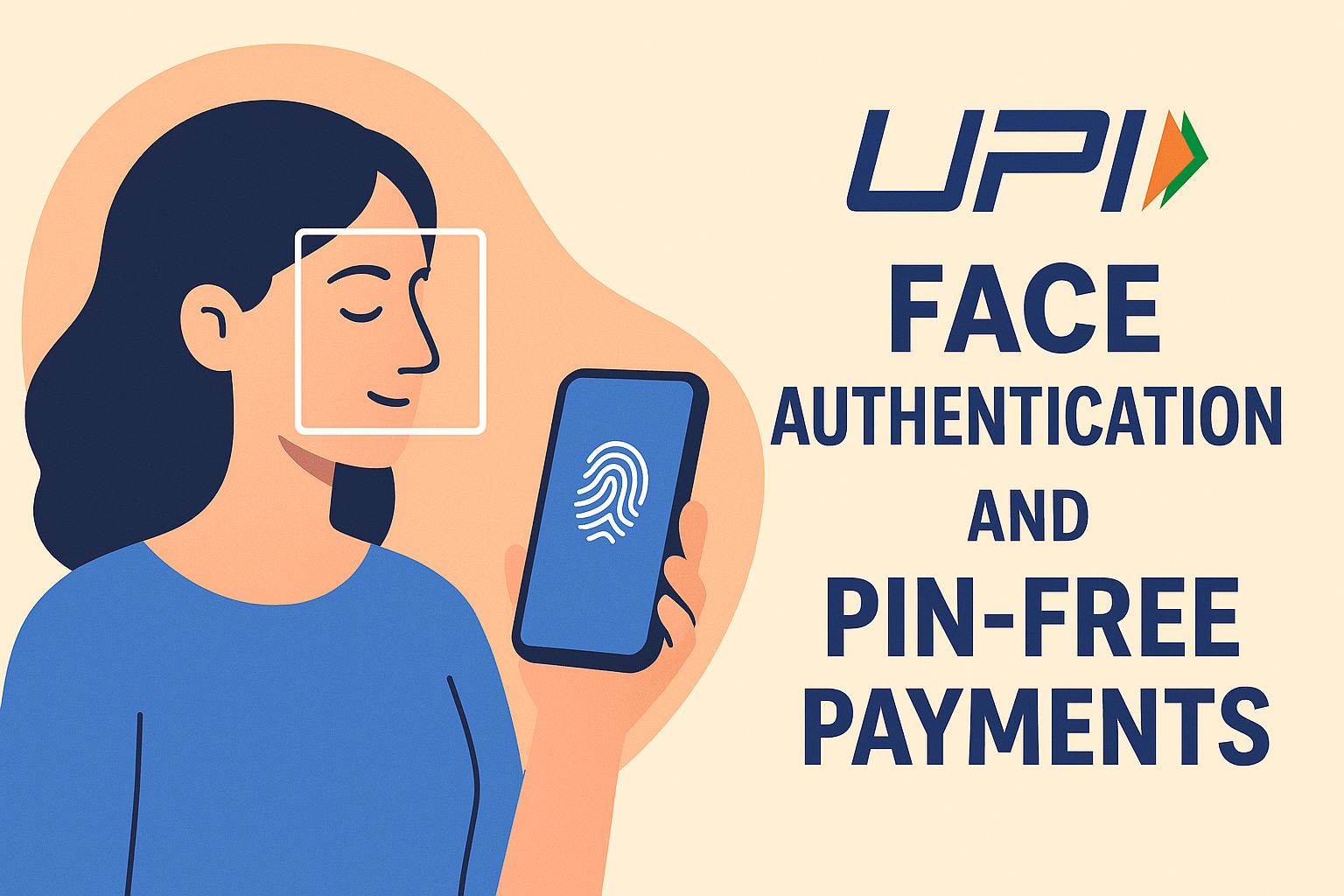
UPI: Face Authentication and PIN-Free Payments , UPI (Unified Payments Interface)

Face Authentication and PIN-Free Payments

UPI’s New Rules from 8 October: Face Authentication and PIN-Free Payments Explained UPI (Unified Payments Interface) has changed the rules from 8 October. These changes affect how people pay and how apps confirm identity. In simple words, UPI now asks for stronger authentication. One big change is the use of face-based authentication and limiting PIN-free payments.

Face Authentication and PIN-Free Payments

Face authentication allowed: Payment apps can now use face biometrics to approve UPI transactions. This means you may use your face to confirm payments instead of just a PIN or fingerprint.

PIN-free (contactless) limits tightened: Apps that allowed small payments without a PIN or biometric must follow stricter rules. The number and value of such transactions are reduced.

Stronger checks for “trusted devices”: Apps must be careful when marking a phone or device as trusted for quick payments. There are steps to confirm the device and the user.

More transparency for users: You will get clearer information about the authentication method used for every transaction. Apps must show when a face scan or PIN was used.

Why these changes were made

Fraud reduction: Fraud using stolen phones, cloned SIMs, or fake OTPs has been rising. Stronger checks reduce such risks

Regulatory push: Authorities want safer digital payments. UPI is widely used, so stricter rules help protect millions of users.

Evolving technology: Face recognition and better device security are available now. Regulators want to use these tools while ensuring safety and privacy.

User trust: When people feel safe, they use UPI more. Clear rules help build trust.

How face authentication works

▪️Apps will ask to use the phone’s front camera and biometric software.

▪️The software checks your face live — it looks for movement, depth, or other signs to stop fake photos or videos.

▪️Face data is normally processed on the device, not sent to servers. This is called *on-device* processing.

▪️If your face matches, the app approves the transaction. You do not need to type the UPI PIN then.

▪️Many phones already have secure ways to store biometrics. Apps must use these secure methods.

What “PIN-free” or “contactless” payments mean now

▪️Previously, apps allowed small payments without entering the UPI PIN. This made quick purchases easy.

▪️New rules limit how many such PIN-free payments a user can make in a row and their total value.

▪️Apps must ask for stronger checks periodically, for example after a set number of transactions or after reaching a value threshold.

▪️For large purchases, you will still need to use the UPI PIN or biometric authentication.

Benefits for users

Better security: Face checks reduce the chance of unauthorized payments.

Convenience: For small, quick payments, face authentication is faster than entering a PIN every time.

Transparency: You’ll know what method was used to approve your payment.

Device-level privacy: When done on-device, your face data stays on your phone.

Concerns and cautions

Privacy worries: Some people worry about apps storing face data. Ask apps how they handle biometric data and whether it stays on your device.

Phone compatibility: Older phones may not support secure face authentication. If your phone is old, you may still need to use a PIN.-

False rejections: Poor lighting or camera problems may cause failed face scans. Apps must provide easy fallback methods like PIN or fingerprint.

Shared devices: If you share a phone, face-based approvals can be risky. Use separate accounts or avoid registering face biometrics on shared phones.

What payment apps must do

▪️Use secure, certified biometric systems that check for live faces (to prevent spoofing).

▪️Store biometric templates in secure areas of the phone (such as a secure enclave).

▪️Limit PIN-free transactions and prompt for stronger checks when rules call for them.

▪️Show clear prompts telling users when the face scan is being used.

▪️Provide easy fallback options if face authentication fails (for example, use a PIN).

▪️Keep logs and show transaction details that indicate what authentication method was used.

What users should do

▪️Update your payment apps when updates arrive. Newer versions will have the required security features.

▪️Read app permissions and privacy policies. Check if the app keeps your biometric data on the device.

▪️Keep your phone software up to date. Security patches help keep biometric systems safe.

▪️Use a strong phone lock (PIN, pattern, password) in addition to biometric locks.

▪️Avoid registering face data on phones you share with others.

▪️For important or large transactions, prefer using UPI PIN or fingerprint if you are not comfortable with face scanning.

▪️If you lose your phone, report it to your bank and block the UPI app immediately.

How this affects merchants and small businesses

Faster checkouts: Face authentication can make payments quicker when customers approve with a glance.

Training staff: Staff should learn when customers might need a PIN or alternative method, and how to handle failed scans.

Device choices: Merchants will need phones or QR devices that support the new secure authentication methods.

Fraud prevention: Stricter rules can cut down losses due to fake payments or unauthorized access.

A few practical scenarios

Buying coffee: You scan a QR code, confirm with a face scan. Payment completes in seconds without typing a PIN.p

Grocery run: Several small purchases may go through without a PIN — until the app requires a PIN after a few transactions or a limit is reached.

Shared phone: If someone borrows your phone, they should not be able to pay using your face. Do not register your face on shared devices.

Lost phone: If your phone is stolen, the thief cannot easily pay if the phone requires biometric checks and your lock is strong. Still, report and block the app.

Final thoughts

The new UPI rules from 8 October bring stronger safety and modern convenience. Face authentication can speed up small payments and reduce fraud. But users should stay aware of privacy and compatibility issues. Update apps, check permissions, and use fallback methods when necessary.Overall, these changes aim to make UPI safer while keeping it easy to use. With common-sense precautions, most people should benefit from faster and more secure payments.

MUDRA Loan Scheme (Pradhan Mantri Mudra Yojana, PMMY)

MUDRA Loan Scheme (Pradhan Mantri Mudra Yojana, PMMY)

MUDRA Loan Scheme (Pradhan Mantri Mudra Yojana, PMMY)

MUDRA Loan Scheme: Fueling India’s Micro Entrepreneurs

When we think of India’s economic engines, we often picture big factories, tech parks, or exports. But many of the jobs, ideas, and livelihoods are built in small units: a roadside tea stall, a tailoring home, a local repair shop, a small café, a mobile recharge kiosk. These micro businesses often lack access to formal credit — lenders ask for collateral, complex accounts, or high paperwork. That’s where MUDRA comes in.

MUDRA stands for Micro Units Development & Refinance Agency. The Pradhan Mantri Mudra Yojana (PMMY) was launched in 2015 to “fund the unfunded” — to extend loans to non‑farm, non‑corporate micro enterprises, often without collateral, so they can grow, scale, and generate jobs.

🏛 What Is MUDRA Loan / PMMY?

MUDRA is not a separate bank; it is a refinance and development arm created by the Indian government to support small units. Under PMMY, banks, NBFCs, MFIs, and cooperatives provide micro‑loans to small businesses. The role of MUDRA is to provide refinancing support and guarantee/subsidy frameworks.

The core idea: small units often cannot access loans because of lack of collateral, small amounts, or high risk perception. MUDRA bridges that gap by offering *collateral-free loans*, easier access, and a structure that de-risks lending for financial institutions.

When launched, the target was huge: funding millions of small businesses across India, in urban and rural areas alike.

📂 Categories / Types of MUDRA Loans

To match needs of different stages of entrepreneurship, MUDRA loans are divided into categories: | Category | Loan Limit | Best Use Case

Shishu : Up to ₹50,000 For new or very small enterprises starting out

Kishore : Above ₹50,000 up to ₹5,00,000 For growing enterprises needing capital to expand

Tarun : Above ₹5,00,000 up to ₹10,00,000 | For established small businesses looking to scale further

Tarun Plus : Above ₹10,00,000 up to ₹20,00,000 | A newer category (from 2024) for borrowers who have already repaid a prior Tarun loan successfully

Recently, in the 2024 budget, this Tarun Plus category was introduced, effectively doubling the top limit for qualified borrowers.

These categories allow the scheme to cater to a wide spectrum — from fresh micro enterprises to ones ready for larger capital infusion.

✅ Eligibility Criteria & Key Conditions

To qualify for a Mudra Loan, certain basic eligibility conditions must be met:

Applicant must be an Indian citizen (resident).

The enterprise must be non‑corporate, non‑farm in nature (i.e. not large agricultural or corporate operations).

Age requirement: generally 18 to 65 years (varies slightly by lender).

The business should be income generating — e.g. manufacturing, trading, services, repair, shopkeeping, artisanal, small units, etc.

Proper documentation (identity proof, address proof, business plan, bank statements, etc.).

Some additional technicalities:

▪️ Loans under the scheme are collateral‑free (no security or mortgage required) up to the scheme caps.

▪️These loans are often covered under a Credit Guarantee Fund (CGFMU / MUDRA Guarantee) so that lenders have protection against default risk.

▪️The interest rate is set by the lending institution based on guidelines, risk, and credit profile. It is not uniform.

Thus, MUDRA reduces the barriers to credit — especially for those with limited assets but with viable business plans.

💸 Interest Rates, Repayment, Tenure & Fees

Interest Rates

Interest rates under the MUDRA scheme are not fixed by a single uniform rate. Instead, they depend on:

▪️The lending institution’s policy

▪️The risk profile of the borrower

▪️The nature of the business

The category (Shishu, Kishore, Tarun) Typically, these rates are lower than many unsecured commercial loans but higher than large industrial credit rates. Some sources suggest ranges around 9% to 12% per annum, though actual rates vary.

Tenure / Repayment Period

The maximum tenure is linked to the *economic life of the assets you create (machinery, inventory) and your cashflow.

For Shishu, the repayment period can extend up to 5 years in some cases.

For other categories, term is typically up to 3 to 5 years depending on viability and agreement.

Processing Fees & Charges

▪️Many banks waive processing fees for Shishu category.

▪️Lenders may charge a small upfront fee or documentation charges under their internal guidelines.

▪️No collateral means you won’t bear costs of valuation, but you must comply with guarantee or credit guarantee fund terms.

Foreclosure / Prepayment

▪️Most lenders allow prepayment / foreclosure without additional penalty under this scheme, but this depends on specific bank norms. (Check with your lender)

▪️Because borrowers are small, many prefer to clear early if cash allows to reduce interest burden.

🎯 Major Benefits and Why It Matters

1. Access to Credit for Small Units

Many micro businesses operate outside the formal banking sphere. MUDRA brings them into the system, enabling access to institutional credit rather than relying on informal lenders.

2. Collateral-Free Loans

This is a game-changer: loans without security relieve entrepreneurs who don’t own property or large assets.

3. Job Creation & Economic Growth

Small units financed under MUDRA help generate employment locally, especially in Tier II/III towns. The multiplier effect is strong.

4. Women & Marginalized Inclusion

Over the years, a major share of MUDRA credit has gone to women entrepreneurs. Reports show ~67% accounts are women.

5. Support for “Make in India” & Self‑Reliance

MUDRA aligns with national goals of encouraging local manufacturing, micro production, and reducing dependency on imports. It supports micro units in agriculture allied, services, and retail.

6. Encouraging FormalizationCIBIL score tips

When micro units get institutional credit, they often adopt better accounting, compliance, and formal business habits — which can support further growth and investment.

7. Credit Guarantee Protection

With a guarantee fund in place, lenders face lower risk, making them more willing to lend to micro borrowers.

🛠 How to Apply / Steps & ProcedureHere’s a step-by-step guide:

1. Decide your category (Shishu / Kishore / Tarun / Tarun Plus) based on your business need.

2. Prepare documents: identity proof, address, business plan, bank statements (last 6 months), quotations, income proof (if any), GST or Udyam registration (if applicable).

3. Choose a lender: any bank / NBFC / MFI / cooperative which is part of the PMMY network.

4. Visit bank branch / apply online: many banks and platforms now allow online application via UdyamMitra or JanSamarth portals.

5. Submit application & conduct bank scrutiny: the lender will evaluate your business viability, cash flows, documents, and risk.

6. Disbursement & sanction: if approved, funds will be released to your account, often within days.Scapia Federal Credit Card — Travel, UPI & Rewards United

7. Repayment: Start paying EMIs as scheduled. Maintain discipline.

Some borrowers report friction in the process — delays, asks for extra documentation, or subjective judgments. E.g., one startup founder described visiting multiple banks, being asked odd personal questions, and being delayed.

Challenges, Issues & Criticism

1. Implementation Delays & Rejections

Many eligible entrepreneurs complain that banks delay, demand extraneous documents, or deny even clear cases — the on-ground odds are harder than theory.

2. Fraud & Misuse

There have been reported cases of fake companies taking MUDRA loans and defaulting. For example, in Uttar Pradesh, fraudulent enterprises received loans under facade projects.

3. Interest Rate Burden

The interest rates, though better than some informal lending, can still be high for small businesses with tight margins — making repayment difficult. Some Reddit users point this out.

4. Over‑Rigid Bank Practices

Some banks demand collateral or additional guarantees even when not needed under scheme guidelines. That violates MUDRA principles.

5. Credit Limit Cuts / Arbitrary Decisions

Even after sanctioning, some borrowers report sudden reductions in credit limit or changes in terms.

6. Underutilization & Exclusion

Some small units do not apply because they lack awareness or fear the process. Also, some geographies / small banks may not actively promote or service MUDRA credit well, leading to uneven reach.

🔄 Recent Changes & Updates

As per the 2024–25 Union Budget, the MUDRA loan limit for eligible borrowers (Tarun category) has been raised to ₹20 lakh (Tarun Plus).

The government continues to allocate funds and push disbursements: in FY24, disbursal target was ₹5,00,000 crore under PMMY.

In FY25, more than 4.79 crore loans were sanctioned amounting to ~₹5,02,782.13 crore.

There is increasing focus on digital application, faster processing, and improving outreach, especially in rural areas.

These changes aim to broaden reach and ease access further, though challenges remain.

Tips & Best Practices for Applicants

▪️Prepare a clear business plan and projections — lenders look at viability.

▪️Maintain clean financials / bank statements for 6+ months.

▪️Be consistent in your document submission — missing or error in address, ID, or quotations can derail the loan.

▪️Choose the right category — don’t ask for more than you need; start with Shishu / Kishore if applicable.

▪️Approach small / local branches familiar with micro credit routines.

▪️Use digital portals (UdyamMitra, JanSamarth) for preliminary approval or pre-check.

▪️Monitor your repayments; avoid default.

▪️If rejected, don’t take no immediately — ask for reasons, escalate, try a different bank.

▪️Document every step — keep receipts, emails, acknowledgments.

🔮 Future Outlook & Suggestions

Better digital onboarding: full online end-to-end processing, e-KYC, minimal paperwork.

Stronger supervision & accountability: audits to reduce fraud, misallocation, or default.

Rate rationalization: bring interest rates down further or provide sliding subsidies for very small units.

Customized packages by sector: agro, artisans, tech micro startups can have tailored sub-schemes.

Greater outreach & awareness campaigns in remote, backward regions.

Partnerships with fintechs to assess credit risk using alternative data (GST, sales data) and reduce rejections.

🧾 Summary & Closing ThoughtsThe

MUDRA Loan Scheme / PMMY is a bold, visionary policy to empower micro entrepreneurs, ensure financial inclusion, and build grassroots growth. It offers collateral-free credit, multiple categories to suit business needs, and a pathway for small units to move into formal banking.

But the road is not smooth: implementation gaps, delays, rejection behaviors, defaults, and misuse are real challenges. The success of MUDRA will depend not just on policy design, but on execution, oversight, and continuous iteration.

If you or someone you know is planning to start a micro business — MUDRA offers one of the best available routes for credit. But go in prepared, informed, and with realistic expectations.

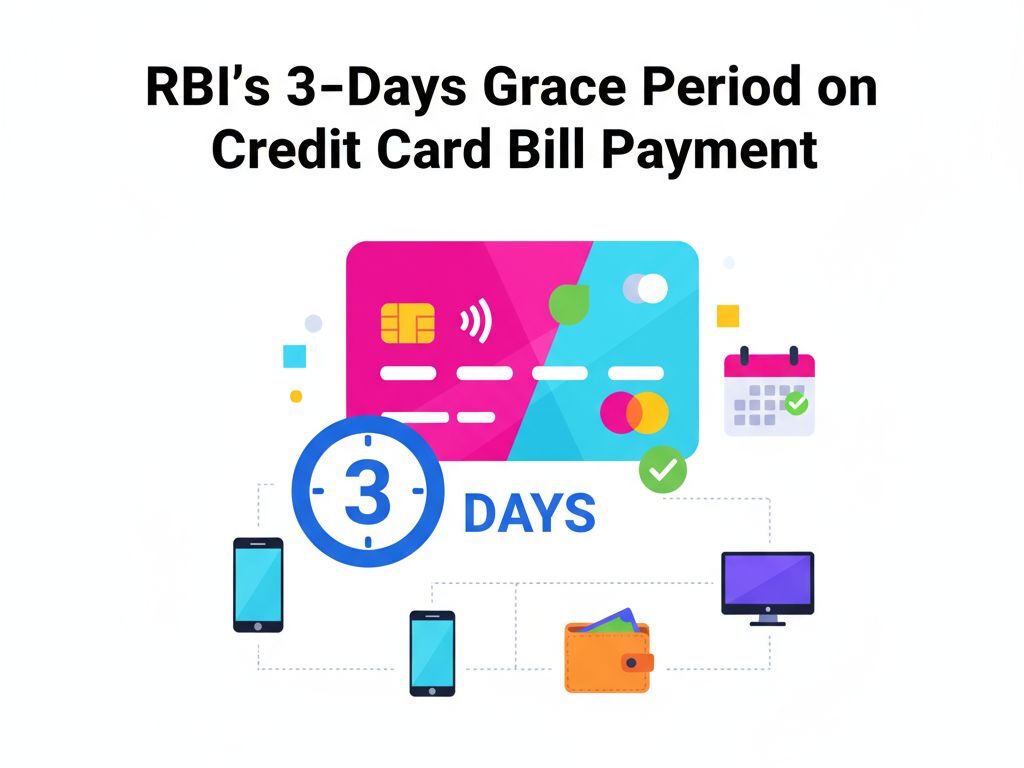
RBI’s 3‑Days Grace Period on Credit Card Bill Payment

3‑Days Grace Period on Credit Card Bill Payment

RBI’s 3‑Days Grace Period on Credit Card Bill Payment

🕒 RBI’s 3‑Day Grace Period: A Lifeline for Credit Card Users Have you ever missed your credit card payment by a few hours or even a day? Panic sets in — thinking of late fees, bad credit score hits, and calls from banks. But did you know that RBI’s rules allow a 3‑day grace period before banks can penalize you or report defaults? This buffer can come as real relief — if you know how it works.

In this, we’ll walk through:

What the 3‑day grace period means – Which rules or guidelines enforce it – How banks can (and cannot) act in those days – What advantages this gives you – Things to watch out for, limitations, and real user experiences – Steps you should take to use this grace period wisely

Let’s beginRbi rules 2025

📜 What Exactly Is the 3‑Day Grace Period? Under the RBI Master Direction — Credit Card & Debit Card — Issuance and Conduct Directions, 2022, there is a key clause:

“Card issuers shall report a credit card account as ‘past due’ to credit information companies (CICs) or levy penal charges, viz. late payment charges and other related charges, only when a credit card account remains ‘past due’ for more than three days.”

In simpler language:

If your due date is Day 0, banks cannot impose late fees, penal interest, or report you as “past due” till Day 3 (i.e. the first three full days after the due date).

Only when you cross into Day 4 (i.e. more than three days late) can banks start charging penalties or reporting to credit bureaus.

The penalty / late payment charges must be calculated only on the outstanding amount still unpaid after the due date, not on the entire billed amount.

Changes in penalty structure or fee structure must be notified to customers in advance (prospective changes).

So this grace is legally mandated for all credit card issuers in India to protect consumers from harsh immediate penalties.

What You Gain from This Rule

1. Breathing Room in Case of Delay

Life happens — you may miss payment due to forgetfulness, internet issues, banking holidays, or paycheck delay. The 3-day rule gives you buffer time to settle your due without penalty.

2. Avoiding Immediate Credit Score Hit

You can clear the due within three days, and your account will not be reported to credit bureaus as “past due.” In effect, your credit history remains safe.

3. Transparency & Fairness Mandate

Banks must clearly disclose these rules in billing statements and terms. So you should see a warning like “If payment not cleared within 3 days, account becomes past due.”

4. Reduced Panic, More Control

Knowing you have this buffer reduces stress. It gives you time to arrange funds and make payment without caving under immediate pressure.

🚧 Important Limitations & How Banks Can Act

The grace period is beneficial, but it’s not a magic shield. Here are key things to watch out for:

A. Interest May Keep Accruing

Even if penalty or late fee is not imposed within the first 3 days, interest on unpaid balances might continue to accumulate depending on the card’s terms.

B. Banks May Delay Reversal

Some users report that banks charged fees in error even when payment was made within grace period — but they reversed when customers raised the claim.

C. Third‑party Payment Delays

If you pay via third-party apps (e.g. wallet, aggregator) that take time to settle, that may push your effective payment beyond the grace window. The bank may argue late arrival. Some users report this issue.

D. Misreporting to Credit Bureaus

Some credit card users claim that even after paying within 3 days, banks reported their accounts as past due. That violates the rule but may still happen.

E. Bank Discretion on Waiving Charges

If a bank accidentally charges a fee, it may waive it if you escalate, especially if you are a good customer. But it’s not guaranteed.

🧪 Real User Stories & Anecdotes

One user paid 1 day late but fell within the grace window — the bank initially charged a late fee but reversed it when the RBI rule was quoted.

Another user found that SBI reported a “days past due” entry despite payment in 3 days; the user had to escalate and ask for correction.

Yet another shared payment delay due to app settlement timing – even though made within 3 days, the card issuer insisted on penalties, claiming settlement delay. This shows grey area when using intermediary apps.

These real stories reflect that rules and their enforcement sometimes diverge, which is why you should proactively monitor your statements.

🛠 How to Use the Grace Period Wisely (Don’t Abuse It)

1. Set reminders before your due date — use calendar, phone alarms

2. Prefer direct payments via bank’s native app or net banking for instant settlement

3. Avoid using delayed payment apps unless you know their processing times

4. Make payment within first 3 days if you miss the due date — that’s your cushion

5. Check your credit score report after payment — ensure no reporting error

6. If wrongly penalized or reported, escalate via customer care, nodal officer, and if needed, regulator (RBI grievance portal)

7. Don’t rely on grace as habit — frequent late payments (even within grace) can harm trust with the issuer

8. Understand your card’s interest clause — grace only shields penalty, not interest, in many cards

📚 What RBI Rules Guide This Grace Period – Master Direction – Credit Card & Debit Card — Issuance and Conduct Directions, 2022, Section 9(b)(v): > “Card‑issuers shall report … or levy penal charges … only when a credit card account remains past due for more than three days.” [1] – Rule also says late payment charges should apply only on the unpaid portion after due date, not entire billed amount.

– The same direction requires that card issuers explain clearly the implications of minimum payments, past due status, transparent billing cycles, etc.

Thus, the grace period is not a courtesy — it’s a regulatory mandate that every bank and credit card issuer must follow.

🔚 Final Thoughts

The 3‑day grace period* introduced by RBI for credit card payments is one of the more customer‑friendly rules in recent times. It gives a small but meaningful buffer, reducing stress for cardholders who might miss due dates for genuine reasons.

However, you should not rely on it as a habit — repeated delays, especially pushing near the end of the 3 days, can lead to mistakes or wrong penalties. Always aim to pay on or before the due date. Use the grace only as a safety net, not a crutch.

Also, keep an eye on your credit statements, ensure no wrong reporting happens, and escalate issues promptly if banks err. If used smartly, this rule gives you peace of mind — just don’t take it for granted.

Tata Neo Card: Features and Benefits

Tata Neo Card

Tata Neo Card: Features and Benefits

1) What is the Tata Neo Card?

The Tata Neo Card is a credit card issued by Tata (the Tata Group) in collaboration with a bank and a payments network. It’s designed to be convenient for day-to-day spending, with rewards, discounts, and various perks. Think of it as a tool to pay for purchases, earn rewards, and access special offers from partners.

Key idea: A credit card lets you borrow money up to a limit and pay it back later, often with interest if you don’t pay in full.

2) Who is this card for?

Everyday shoppers:People who buy groceries, fuel, online, and offline purchases.

Rewards lovers: If you like earning points, cashback, or discounts on things you already buy.

New-to-credit builders:If you’re looking to build or improve your credit history (with responsible use).

Smart savers: Those who want access to exclusive Tata-related offers, experiences, or member benefits.

Note: Always check the eligibility criteria and ensure you can meet the spend, payment, and age requirements.CIBIL score tips

3) Core features you’ll typically find

3.1 Welcome offers and sign-up rewards

One-time welcome bonus: Some Tata Neo Cards offer bonus points or instant discounts after you spend a certain amount in the first few months.

Intro APR or 0% periods: A few cards may have a short period where purchases don’t accrue interest (depending on the issuer).

3.2 Rewards and earning categories

Reward points or cashback: Earn points per ₹ spent on eligible transactions.

Boosted earns on select categories: Higher rewards on categories like groceries, fuel, dining, online shopping, or Tata ecosystem purchases.

Flexible redemption: Use points for statement credit, gift vouchers, merchandise, or partner offers.

3.3 Cashbacks and statement creditsIcici bank amazon credit card

Direct cashback: A percentage of eligible spends credited back to your account.

Statement credits: Offsets against your monthly bill for specific buys or partners.

3.4 Fuel, groceries, and everyday categories

Category-based rewards: Some cards provide extra points or higher cashback on fuel, groceries, or daily essentials.

Contactless payments: Tap-and-go for quick, secure transactions.

3.5 Tata ecosystem benefits

Partner offers: Discounts or exclusive deals with Tata services, retail partners, and experiences.

Loyalty integration: Earn or redeem points across Tata brands or partner programs.

3.6 Insurance and protections

Purchase protection: Coverage for a limited time against damage or theft.

Extended warranty:Extra warranty on eligible purchased items.

Travel accident insurance: Some cards offer coverage when you travel (check limits and eligibility).

3.7 Cardholder services

Concierge or customer support: Help with card-related questions, disputes, or lost card replacement.

Digital wallet compatibility: Add your card to Apple Pay, Google Pay, or other wallets.

Online account management: Track spending, rewards, and statements online or via a mobile app.

3.8 Safety and security features

Chip and PIN, EMV security: Standard in most cards for secure transactions.

Fraud monitoring: Alerts and protections to detect unusual activity.

Lock/unlock card: Optional feature to temporarily lock the card if you misplace it.

4) How rewards and redemption usually work

Earning points: For every ₹1 spent, you earn a certain number of points. Some categories may offer higher rates.

Redeeming points: Points can usually be redeemed for: – Statement credits against your balance – Gift vouchers or merchandise – Partner experiences or services – Cash back or discounts at specific merchants

Expiry and limits: Some programs have points that never expire; others have expiry or minimum redemption thresholds. Always check terms.

Transfer options: Some cards let you convert points to airline miles or hotel programs, though this varies.

Tip: Keep an eye on the best value redemptions. Sometimes a small difference in redemption value can save you more money.

5) How to use the Tata Neo Card wisely

Pay on time, every time: Always try to pay your statement in full to avoid interest charges.

Budget and track spending: Use the card’s app or your bank app to monitor categories and avoid overspending.

Maximize rewards: Use the card for the purchases that earn the most points or cashback, but don’t buy things you don’t need just to earn rewards.

Meet minimum spend for offers: If there’s a welcome offer, ensure you meet the required spend within the timeframe.

Check merchant eligibility: Some offers or rewards apply only to specific merchants or online vs. in-store purchases.

6) How to decide if the Tata Neo Card is right for you

Ask yourself these questions: Do I already shop with Tata partners or brands where I could leverage offers?

Do I pay my balance in full every month, so I can avoid interest?

Will the annual fee be offset by rewards and discounts I’ll use?

Am I comfortable with the terms of rewards, fees, and redemption options?

If you answered yes to most of the questions, the Tata Neo Card could be a good fit. If you’re unsure, you can start with a no-annual-fee card or a lower-fee option to test the waters.

Final thoughts

The Tata Neo Card can be a helpful companion for people who spend regularly in the Tata ecosystem or who want a straightforward way to earn rewards on everyday purchases. Like any financial product, its value depends on your spending habits, how well you manage the card, and whether the rewards and benefits align with what you actually use

Top 10 Skills You Must Learn for a Better Future

Top 10 Skills You Must Learn for a Better Future

.Top 10 Skills You Must Learn for a Better Future Especially students, professionals, or career seekers.

The world is changing fast. Jobs are changing. Technology is growing. To stay ahead and build a successful future, you need to learn the right skills. Some old skills are no longer useful, and new skills are becoming important.

We will share the top 10 skills you should learn for a better and secure future.

1. Digital Literacy

Today, everything is online. You must know how to use digital tools like smartphones, computers, the internet, apps, and online platforms. Whether you’re a student or a working professional, basic computer knowledge and the ability to use tools like MS Office, Zoom, Gmail, and Google Docs are must-have skills.

Bonus Tip: Learn how to use AI tools like ChatGPT, Canva, Notion, and Google AI to stay ahead.

2. Communication Skills

Being able to speak and write clearly is one of the most valuable skills. You need good communication to attend interviews, lead teams, speak in meetings, and even express your ideas online.

Learn to speak in English confidently – Practice active listening – Improve your writing through emails, messages, and blogs

Pro Tip: Read books, write short posts, and practice speaking in front of a mirror.

3. Emotional Intelligence (EQ)

In simple words, EQ means understanding your emotions and other people’s emotions. It helps you build strong relationships, stay calm during stress, and become a better leader.High EQ = Better teamwork + Fewer conflicts + More success ,Start by observing your feelings and learn how to respond instead of reacting.

4. Creativity & Problem Solving

Companies are looking for people who can think creatively and solve problems. It doesn’t matter if you’re in marketing, finance, or IT—problem-solving is needed everywhere.- Be open to new ideas – Learn how to look at a problem from different angles – Practice brainstorming solutions,Think of creativity as not just art, but as a way to find smarter, faster solutions.

5. Adaptability & Flexibility

The world is uncertain. New technology, new jobs, and new challenges come every year. If you’re flexible and ready to learn new things, you will always stay ahead. Always ask: “What can I learn from this change?”

6. Leadership Skills

You don’t have to be a manager to be a leader. Leadership means taking responsibility, helping others, and guiding your team to success.- Be reliable and trustworthy – Inspire others through actions – Take initiative even in small things. Leadership is a skill that grows with time and experience.

7. Financial Literacy

You may earn money, but if you don’t know how to manage it, you won’t grow. Basic financial knowledge is very important.

Learn to: Save money- Create a budget- Use digital banking apps- Understand loans, EMIs, credit cards- Start investing (mutual funds, SIP, gold, etc.) Money skills = Life skills. Learn them early.

8. Data Analysis & Critical Thinking

In today’s world, we are surrounded by data. Whether it’s business, healthcare or education

Making decisions based on data is important. Learn how to read charts and graphs – Understand how to collect and use data – Use tools like Excel, Google Sheets, or basic analytics platforms,Critical thinking helps you understand the why behind the data.

9. Time Management

Time is your most valuable resource. Learning how to manage your time can improve your life, reduce stress, and boost your performance.- Plan your day – Use a calendar or planner – Break large tasks into small steps – Avoid multitasking. A few good habits can save hours every week.

10. Learning How to Learn

The most important skill is the ability to learn new skills. In the future, jobs may change, but if you know how to learn fast, you will always stay prepared.- Take online courses – Watch tutorials – Read blogs, articles, and books – Join communities and ask questions. Stay curious. The best learners are the most successful people.

💡 Final Thoughts

You don’t need to learn all 10 skills in one day. Start with 2 or 3 that match your current goals. Keep learning, keep practicing, and keep improving. The world is full of opportunities, but only for those who are ready.These skills are not just for getting jobs — they will also help you grow as a person and live a more successful, confident life.

✅ Summary of the Top 10 Skills:| Skill | Why It Matters

Digital Literacy ▶️ For jobs, business, and daily life

Communication ▶️ Helps in teamwork, interviews, public speaking

Emotional Intelligence ▶️ Builds better relationships

Creativity & Problem Solving ▶️ Needed for innovation

Adaptability ▶️ Survive change and uncertainty

Leadership ▶️ Take charge and grow in career

Financial Literacy ▶️ Manage money and plan future

Data & Critical Thinking ▶️ Smart decisions backed by facts

Time Management ▶️ More productivity, less stress

Lifelong Learning ▶️ Stay relevant always

Middle-Class Trap in Credit Cards

Middle-Class Trap in Credit Cards

Middle-Class Trap in Credit Cards: A Silent Debt Cycle ,Credit cards have made life easier for many middle-class families in India and around the world. They allow you to shop now and pay later. But this same feature can become a trap especially for middle-class people who often balance between income and expenses.

The Credit Card Trap

We will talk about how credit cards can silently trap the middle class in a debt cycle, and how to avoid it.Best cashback credit card

What is the Credit Card Trap?

A credit card trap happens when you spend more than you can repay and carry forward unpaid bills to the next month. This unpaid amount keeps growing with high interest and soon, you are stuck paying only interest not the actual bill.It feels like you’re paying every month, but the debt never goes down.

💳 Why Middle-Class People Fall Into the Trap

Middle-class families often have limited income and many expenses — school fees, rent, EMI, medical bills, and more. Credit cards give a sense of relief during financial pressure.But here’s where the trap starts:

1. Spending Beyond Budget

Credit cards make spending easy. With just a swipe, you can buy phones, clothes, or even pay bills. Since there is no immediate cash outflow, many people lose track of spending.

What looks like a small ₹2,000 dinner, a ₹5,000 shopping trip, or ₹10,000 travel booking adds up quickly.

2. Paying Minimum Due Only

Banks give you the option to pay only the “minimum due”, which is usually 5% of your total bill. Many people think this is fine. But the remaining 95% carries forward with high interest (30–40% per year).This creates a debt snowball ,where your debt keeps growing month after month.

3. Multiple Credit Cards

To manage bills, people take multiple credit cards. They use one to pay the other or keep switching between them. This seems smart at first, but it becomes very hard to track, and debt starts increasing silently.

4. No Emergency Fund

Middle-class families often don’t have emergency savings. So, during sudden medical needs or job loss, credit cards are used. But paying these back becomes a challenge without income or savings.

5. Temptation from Offers

Banks offer Cashback, EMI options, Reward points and discounts. These marketing tricks tempt people to spend more. But often, the interest and charges wipe out those rewards.

⚠️ What Happens When You Fall into the Trap

1. High Interest

If you miss even one payment, you pay late fees + interest.

2. Lower Credit Score

Delay in payments affects your CIBIL score.

3.Debt Pressure

Monthly stress increases as bills grow.

4.Mental Health

Financial stress causes anxiety and sleepless nights.

5. No Savings

All income goes in paying bills, no money left for future.

6. Loan Rejection

With a bad credit history, you may not get home or car loans.

Real Example of the Trap

Let’s say Ramesh, a salaried person, earns ₹35,000/month.- He spends ₹20,000 on daily needs. – One month, he uses a credit card to buy a new phone worth ₹15,000.He pays only ₹1,500 (minimum due).Now, ₹13,500 goes to next month with 36% annual interest.Next month, an emergency hits, and he spends ₹10,000 more on the card. Soon, he is paying ₹3,000/month just in interest – but the main amount is not reducing.This is how Ramesh falls into a credit trap.

How to Avoid the Credit Card Trap

✅ 1. Use Credit Card Like a Debit

Never spend more than what you already have in your bank account. Before swiping, ask yourself ,“Can I pay this full amount next month?”

✅ 2. Always Pay Full Bill Not Minimum Due

Pay the total amount due on or before the due date. Minimum payment is just a trap to make you pay interest.

✅ 3. Track Your Spending

Use credit card apps or write down your expenses in a diary. Set spending limits for categories like food, shopping, or travel.

✅ 4. Avoid Impulse Shopping

Don’t buy just because there’s a sale or offer. Ask yourself “Do I really need this?” Wait 24 hours before big purchases.

✅ 5. Keep Only One or Two Credit Cards

The more cards you have, the harder it becomes to manage them. Stick to one card that gives basic rewards and suits your lifestyle.

✅ 6. Build an Emergency Fund

Start saving at least 10% of your income. In 6 -12 months, you should have 3–6 months of expenses saved.

✅ 7. Don’t Use Credit Card for Cash Withdrawal

Withdrawing cash from a credit card comes with very high charges and no interest-free period. Avoid unless it’s a life emergency.

✅ 8. Understand Your Card’s Terms

Read the fine print — interest rates, billing cycle, late fees, and hidden charges. Awareness protects you.

✅ 9. Avoid Paying One Card with Another

This is a dangerous cycle. You are not clearing debt, just shifting it. Look for better solutions like a personal loan or EMI conversion.

✅ 10. Get Financial Advice if Needed

If you are already in a credit trap, consult a financial advisor ,or talk to your bank. Some banks offer balance transfer or settlement plans.

✍️ Final Thoughts

Credit cards are not bad. In fact, they are very useful if used the right way. But for many middle-class people, the lack of financial awareness, emotional spending, and pressure to maintain a lifestyle becomes a dangerous mix.

Credit cards give short-term comfort but can cause long-term pain if misused. Be aware, be disciplined, and don’t fall for the trap.

Live within your means. Spend smartly. Save regularly.

Because money saved is money earned — and peace of mind is priceless.

Credit Card vs Cash: Which Is Better for You?

Credit Card vs Cash: Which Is Better for You?

Credit Card vs Cash: Which Is Better for You?

Credit Card vs Cash: Which Is Better

In today’s world, we have many ways to pay for things ,credit cards, UPI, debit cards, and of course, cash.

But one common question is:

Should you use a credit card or cash?

Each method has its advantages and disadvantages.

We will help you understand when it’s better to use a credit card, and when cash is the smarter choice. Let’s break it down.

What is a Credit Card? Credit Card awareness

A credit card allows you to borrow money from your bank to make purchases. You can pay the amount back later, usually within 45–50 days without interest.

What is Cash? CIBIL report

Cash means physical money – notes and coins. You pay immediately using your own money.

Comparison: Credit Card vs Cash

Let’s compare the two based on key points:

1. Convenience- Credit Card: Very convenient. You don’t need to carry cash. One swipe, and payment is done. Also works for online payments.

Cash: Not suitable for big purchases or emergencies. Also not accepted everywhere in digital-first stores.

✅ Winner: Credit Card

2. Rewards and Cashback

Credit Card: Offers cashback, points, and discounts on shopping, fuel, dining, and travel. You get rewarded for spending.

Cash: No rewards or benefits. You just pay and go.

✅ Winner: Credit Card

3. Control Over Spending

Credit Card: It’s easy to overspend. Since you don’t see money leaving your hand, you might not realize how much you’re spending.

Cash: Helps you stay within budget. You can only spend what you have in your wallet.

✅ Winner: Cash

4. Safety

Credit Card: Safer than cash. If lost or stolen, it can be blocked instantly. Most banks offer fraud protection.

Cash: If you lose it, it’s gone forever. No way to recover.

✅ Winner: Credit Card

5. Emergency Use

Credit Card: Extremely useful in emergencies. You can pay for sudden medical bills, travel bookings, or home repairs.

Cash: Not always enough for emergencies unless you carry large amounts.

✅ Winner: Credit Card

6. Building Credit Score

Credit Card: Helps you build a credit score if you pay bills on time. A good score helps you get loans, home loans, or even jobs.

Cash: Doesn’t help in any way with credit score.

✅ Winner: Credit Card

7. Interest Charges and Fees

Credit Card: If you don’t pay on time, banks charge high interest (30-40%), late payment fees, and penalties.

Cash: No extra charges. You spend what you have.

✅ Winner: Cash

8. Acceptance

Credit Card: Widely accepted – malls, hotels, flights, and online stores. But small shops or villages may not accept it.

Cash: Accepted everywhere, especially in rural or cash-preferred places.

✅ Draw: Both win depending on the place

9. Spending Track Record

Credit Card: Every transaction is recorded. Helps with budgeting and tax filing.

Cash: No record unless you write it down manually.

✅ Winner: Credit Card

10. Foreign Travel

Credit Card: Easier to use abroad than carrying lots of cash. Some cards offer zero forex charges.

Cash: Needs currency exchange. Risky to carry too much.

✅ Winner: Credit Card

✅ When to Use Credit Card- When you shop online or travel- When you can pay full bill on time- If you want to earn cashback or rewards- For emergency expenses- To build your credit score

✅ When to Use Cash -When managing your budget strictly- At local markets, roadside vendors, or in villages- If you are prone to overspending- When you want to avoid interest or late fees

⚠️ Tips for Smart Credit Card Use- Always pay full bill before due date – Avoid withdrawing cash from credit card (high fees) – Set spending limits or use apps to track usage – Don’t have more than 2–3 cards unless needed – Avoid “minimum due” trap – it increases debt

💬 Final Words

Both credit cards and cash have their own place in your financial life. A smart person uses both — knowing when to spend with a card and when to use cash.If you can control your spending, use your credit card wisely, and pay bills on time — a credit card is powerful. But if you want full control, zero risk of debt, and simplicity, stick to cash.

The choice is yours — just make sure it suits your *financial habits and goals*.—*Category:* Personal Finance / Money

Top 10 Online Business Ideas to Start from Home in India (2025)

Top 10 Online Business Ideas to Start from Home

Top 10 Online Business Ideas to Start from Home in India (2025)

The internet has opened up endless opportunities to start a business from the comfort of your home. Whether you’re a student, working professional, or stay-at-home parent, starting an online business is easier than ever — and many options require low investment.

We’ll explore the top 10 online business ideas you can start in India in 2025. These ideas are practical, profitable, and beginner-friendly.

1.Blogging and Content Writing

If you love writing, blogging is a powerful way to build an online brand and earn money. You can start a blog on topics like finance, health, travel, parenting, or tech.

How to earn Top 10 Money Saving Apps in india

Google AdSense – Affiliate marketing – Sponsored posts – Selling digital products

Tip – Use WordPress to build your blog and focus on SEO to grow traffic.

2. Freelancing Services

Freelancing allows you to offer your skills to clients worldwide. Popular freelance services include:

Graphic design

Web development

Social media marketing

Content writing

Video editing Platforms to start:* Fiverr, Upwork, Freelancer, Toptal.CIBIL report

Why it’s great – You can set your own rates, work remotely, and grow a client base.

3. YouTube Channel or Vlogging

YouTube is a great platform to showcase your creativity. If you’re good at teaching, entertaining, reviewing products, or storytelling.

start a YouTube channel –

Popular niches:Tech reviews – Finance and investing – Cooking – Fitness – Lifestyle and travel

Earnings: Ad revenue, brand deals, sponsorships, affiliate links

4. Affiliate Marketing

Affiliate marketing means promoting other people’s products and earning a commission on every sale made through your referral link.

Where to start: Amazon Associates – Flipkart Affiliate – Hosting and software tools (e.g., Bluehost, Canva, etc.)

Tip: Combine it with a blog, YouTube, or Instagram page for best results.

5. Online Coaching or Digital Courses

If you’re an expert in a subject — whether it’s math, coding, yoga, or personal finance — you can teach online.

Ways to start: Offer live classes via Zoom – Create a course and sell on Udemy or Teachable – Use Instagram or YouTube to promote

Bonus: You build credibility while earning passive income.

6. Dropshipping Business

Dropshipping is an e-commerce model where you sell products online without maintaining any inventory. You partner with a supplier, and they ship the product directly to your customer.

Tools to start: Shopify, WooCommerce + Oberlo

Popular products: Fashion, gadgets, home decor, pet items

Pros: Low risk, low investment, global market access

7. Social Media Management

Businesses are always looking for people to manage their Instagram, Facebook, YouTube, or LinkedIn profiles. If you’re good at creating posts, writing captions, and engaging with followers, this can be a great gig.

Skills needed: Content planning, Canva, basic analytics

Client base: Small businesses, coaches, influencers, NGOs

8. Stock Market and Crypto Education

With growing interest in financial markets, many people are willing to pay for genuine knowledge on trading, investing, and crypto.

Start with: A YouTube channel on stock tips – A blog on financial education – Paid Zoom workshops – Ebooks on market strategies

Important: Always provide value — never mislead people.

9. Sell Handmade or Digital Products

If you’re creative, turn your talent into an income source.

Handmade items: Soaps, candles, crafts, jewellery

Digital products: Ebooks, resume templates, planners, logos

Where to sell: Etsy, Instagram, Meesho, your own website

Tools you can use: Canva, Gumroad, Payhip

10. Virtual Assistant Services

Virtual Assistants (VAs) help business owners with tasks like: Email management – Calendar scheduling – Customer support – Market research

How to start: Build a LinkedIn profile or create a gig on Fiverr

Earnings: ₹15,000–₹50,000/month depending on clients

📌 Final Tips Before You Start- Choose a niche you’re interested in – Start small, but stay consistent – Learn digital marketing basics – Use free tools like Canva, Google Docs, ChatGPT, and WordPress – Track your income and reinvest wisely

🎯 Why Start an Online Business in 2025?

Low or zero startup cost – Full flexibility — work from anywhere – Huge market via social media and websites – No need for a physical office – Easy to scale with automation tools

🚀 Final Words Whether you want a side hustle or a full-time income, these online business ideas can help you build a successful future in the digital world. The best part? You don’t need a huge investment to start just time, consistency, and passion.

Start today, stay patient, and grow your online business one step at a time!

RBI’s New Rules on Rent Payments via Fintech Apps

Your phone could be locked by lenders if you miss EMI payments

RBI’s New Rules on Rent Payments via Fintech Apps

In recent years, many people in India started using apps like PhonePe, Paytm, and Cred to pay rent using their credit cards. It was easy, fast, and came with benefits like cashback and reward points. But now, the Reserve Bank of India (RBI) has introduced new rules that have changed everything.

Let’s break it down in simple terms

💳 Why Were People Paying Rent with Credit Cards? Mobile lock policy

Before we get into the new rules, let’s understand why this method became popular.

Convenience – You could pay rent from your phone in seconds.

Rewards – Many credit cards gave cashback or points for rent payments.

Cash Flow – Credit cards allowed people to pay rent even if they didn’t have enough money in their bank account at the moment.

Interest-Free Period – Users got up to 45 days to pay the credit card bill without interest.

This made rent payments through fintech apps a smart financial move for many.

📜 What Are the New RBI Rules?

On September 15, 2025, RBI released new guidelines for Payment Aggregators (PAs) and Payment Gateways (PGs). These are companies that help process payments between buyers and sellers.

Here’s what the new rules say

Only Registered Merchants Allowed – Fintech apps can now only process payments for merchants who are officially registered with them.

Full KYC Required – These merchants must complete full Know Your Customer (KYC) verification.

No Marketplace Payments – Apps cannot act as a marketplace and send money to people who are not registered merchants.

Since most landlords are not registered merchants, fintech apps can no longer send rent payments to them using credit cards.

🚫 What Does This Mean for You?

If you were using apps like PhonePe, Paytm, or Cred to pay rent with your credit card, here’s what changes You Can’t Use Credit Cards for Rent Payments on These Apps Anymore

– No More Reward Points or Cashback

– You’ll Need to Use Traditional Methods like:

– Bank transfers (NEFT, IMPS)

– UPI

– Cheques

Why Did RBI Make This Change?

RBI had several concerns:

Lack of Proper Verification – Many landlords were receiving money without full KYC checks.

Risk of Misuse – Credit cards were being used for peer-to-peer transfers, which could be risky.

Unregulated Marketplaces – Fintech apps were acting like marketplaces without proper oversight.

RBI wants to make sure that all money transfers are safe, verified, and transparent

Impact on Fintech Companies

This rule is a big change for fintech platforms:

Loss of Business- Rent payments were a major source of income for these apps.

Fewer Transactions – Credit card usage for rent was growing fast, and now it will drop.

Need for New Models – These companies may need to find new ways to offer similar services with full compliance.

Impact on Banks

Lower Credit Card Spending – Rent payments made up a big part of monthly credit card bills.

Less Fee Income – Banks earned money from transaction fees and interest.

Reward Programs Affected – Many banks had already started cutting back on rewards for rent payments even before RBI’s rule.

For example

HDFC Bank started charging a 1% fee on rent payments in June 2024.ICICI Bank and SBI Cards stopped giving reward points for rent payments earlier this year.

👨‍💼 Impact on Tenants

For tenants, this change means – Less Flexibility – You can’t use your credit card to manage rent payments anymore.

No Perks – You lose out on cashback, reward points, and interest-free periods.

More Hassle – You’ll need to go back to old methods like bank transfers or cheques.

🔄 Can This Service Come Back?

Maybe. But it won’t be easy

For fintech apps to offer rent payments again, landlords would need to

-Register as official merchants

-Complete full KYC

-Agree to contracts with the payment platforms

This is a lot of work, and most landlords may not want to go through the process. So, for now, it looks like rent payments through credit cards on fintech apps are gone.

What Should You Do Now?

Here are some tips to adjust to the new rules – Talk to Your Landlord ,Ask if they accept UPI or bank transfers.Plan Your Budget – Without credit card flexibility, make sure you have enough funds for rent each month.Use Other Credit Card Benefits,Focus on using your card for groceries, travel, or shopping to still earn rewards.

Watch for Updates – Fintech apps may come up with new solutions in the future.

📝 Final Thoughts

The RBI’s new rules are meant to make digital payments safer and more transparent. While it may feel inconvenient now, it’s a step toward better regulation and security.Rent payments through credit cards were a clever hack for many, but they also came with risks. As the fintech world evolves, we may see new, compliant ways to make rent payments easier again.Until then, it’s back to basics bank transfers, UPI, and cheques. RBI’s new rules stop credit card rent payments.