IDFC First Select Credit Card

IDFC First Select Credit Card

Unlocking the Power of IDFC First Select Credit Card

In today’s world of financial flexibility and premium lifestyle perks, the IDFC First Select Credit Card emerges as one of the most rewarding credit cards for savvy consumers. Loaded with an array of benefits tailored for travelers, shoppers, and everyday spenders, this card offers unmatched value with zero annual fees. If you are considering a credit card that maximizes your rewards while giving you premium privileges.

Key Features of IDFC First Select Credit Card

FeatureDetails
TypeLifetime-free credit card
Welcome Benefit₹500 voucher on spends ≥ Rs.5,000 in first 30 days
Reward PointsUp to 10X points on spends above spend ₹20,000/month; 3X on upto Rs.20000 spends; 1X point on Insurance and Utility bill payment.
Lounge Access2 quarterly domestic airport lounge visits; 4 quarterly railway lounge visits
Movie DiscountsBuy 1 Get 1 on Paytm/District app, twice per month (max savings ₹250)
Cashback on EMI5% cashback (up to ₹1,000) on first EMI within 90 days
Forex MarkupLow markup at 1.99% on international transactions
InsuranceAir accident cover (₹1 crore), personal accident (₹5 lakh), baggage/flight/passport delay, lost card liability (₹50,000)
Dining & Wellness DiscountsUp to 20% at 1,500+ restaurants; Up to 15% at 3,000+ wellness outlets
Discount Offers300+ merchant offers throughout the year
Fuel Surcharge Waiver1% waiver at fuel stations (up to ₹300/month)
EMI ConversionPurchases over ₹2,500 can be converted to EMI via app
Interest-free ATM Cash WithdrawalUp to 48 days interest-free for domestic/international ATMs
Roadside AssistanceComplimentary, worth ₹1,399/year
EligibilityAge 21-65; Annual income of ₹12 lakhs or more
Card NetworkVisa Signature

What Makes IDFC First Select Credit Card Stand Out?

The IDFC First Select card is designed to combine cost-effectiveness with premium benefits. One of its biggest draws is the lifetime free nature of the card — no joining fee, no annual fee, and no hidden charges. This means you can enjoy the card’s rich features without worrying about recurring costs, making it a fantastic choice for long-term users.

Additionally, it offers a broad spectrum of features from airport lounge access to accelerated reward points that don’t expire, making this credit card a favorite among frequent travelers and lifestyle enthusiasts.Amazon Pay ICICI Bank Credit Card

Key IDFC First Select Benefits Explained

1. Lifetime Free Card with Zero Fees

One of the most attractive features of the IDFC First Select Credit Card is that it is completely free for life. Users pay no joining fees and are exempt from annual renewal charges, saving hundreds of rupees annually.This makes it an excellent option for users who want premium benefits without the burden of high fees.

2. Accelerated Reward Points on Every Spend

▪️The card rewards you generously for your spending:

▪️Earn 10X reward points on every purchase once your spend exceeds ₹20,000 in a billing cycle.

▪️Earn 3X reward points on spends up to ₹20,000 and on important categories such as education fees, government payments, wallet loads, and rent.

Reward points never expire as long as your card account is active.

This accelerated rewards program boosts the value you get on your spending, whether it is daily expenses or occasional high-value purchases.

3. Airport and Railway Lounge Access

Traveling comes with perks on the IDFC First Select card:

▪️Enjoy two complimentary airport lounge visits per quarter in domestic airports on spending a minimum of ₹20,000 each month.

▪️Avail free access to railway lounges across major stations when you travel by train.

With air travel becoming more accessible, these lounge privileges add comfort and luxury to your journeys without additional costs.

4. Travel and International Spending Benefits OneCard Features and Benefits: A Simple, Understandable Guide

▪️The IDFC First Select card offers excellent features for international travelers:

▪️Pay just 1.99% forex markup on international transactions, which is among the lowest in the market.

▪️Complimentary travel insurance coverage** including personal accident and air accident insurance.

▪️The card also offers a Cancellation For Any Reason (CFAR) benefit up to ₹10,000 for flight and hotel bookings, providing protection against unforeseen circumstances.

▪️Access exclusive travel deals via platforms like EaseMyTrip, Goibibo, and Ixigo.

These benefits make the card a smart choice for globetrotters seeking savings and security on international trips.

5. Exclusive Entertainment and Dining Offers

For entertainment lovers, the IDFC First Select card opens up exciting offers:

▪️Buy-one-get-one free movie tickets twice a month via the District app, offering savings up to ₹125 on the second ticket.

▪️Dining discounts and deals at popular restaurants, cafes, and Zomato.

▪️Special offers with lifestyle brands for shopping and more.

These perks enhance your lifestyle while making sure you get rewarded on your leisure spends.

6. Shopping, EMI Options, and Partner Discounts

Shopping gets rewarding with this credit card:

▪️Discounts and cashback offers on over 300 brands, including Myntra, Lifestyle, and TataCliq.

▪️No-cost EMI options on purchases from selected merchants.

▪️A 1% waiver on fuel surcharge up to ₹300 on fuel transactions, helping you save on one of the most frequent expense categories.

7. Safety and Insurance Benefits

The card also keeps your safety and purchases protected:

▪️Personal accident insurance and air accident covers add an extra layer of security.

▪️Purchase protection and lost card liability coverage up to ₹50,000.

▪️24/7 roadside assistance makes sure help is just a call away in emergencies.

▪️Credit shield features to protect against missed payments.

8. Flexible Reward Redemption

Redeeming points is easy and versatile:

▪️Use the FIRST Rewards portal to redeem points for e-vouchers, gift cards, and flight bookings.

▪️Points can be redeemed at minimal fees and can accumulate indefinitely, offering flexibility in choosing when and how to use your rewards.

Why Should You Consider the IDFC First Select Credit Card?

The IDFC First Select Credit Card is ideal for individuals who want to enjoy a premium lifestyle backed by valuable rewards and safety features without paying hefty fees. Whether you are a traveler, an avid shopper, or someone who spends regularly on essentials, this card offers consistent value.

The combination of lifetime free usage, accelerated rewards, lounge access, and special insurance coverages sets it apart from many other credit cards in the market.

How to Maximize Your IDFC First Select Benefits?

To get the most from this card:

▪️Aim to spend above ₹20,000 monthly to unlock the 10X reward points.

▪️Use the card primarily for travel bookings and international spends to benefit from low forex fees and travel insurance.

▪️Take advantage of movie ticket offers and dining discounts regularly.

▪️Redeem reward points strategically through the online portal for maximum value.

Final Thoughts

If you are looking for a credit card that offers luxury, savings, and security catered to a modern lifestyle, the IDFC First Select credit card is a perfect choice. With no joining or annual fees and an impressive array of benefits, this card enhances your spending power while giving peace of mind on your journeys and purchases.
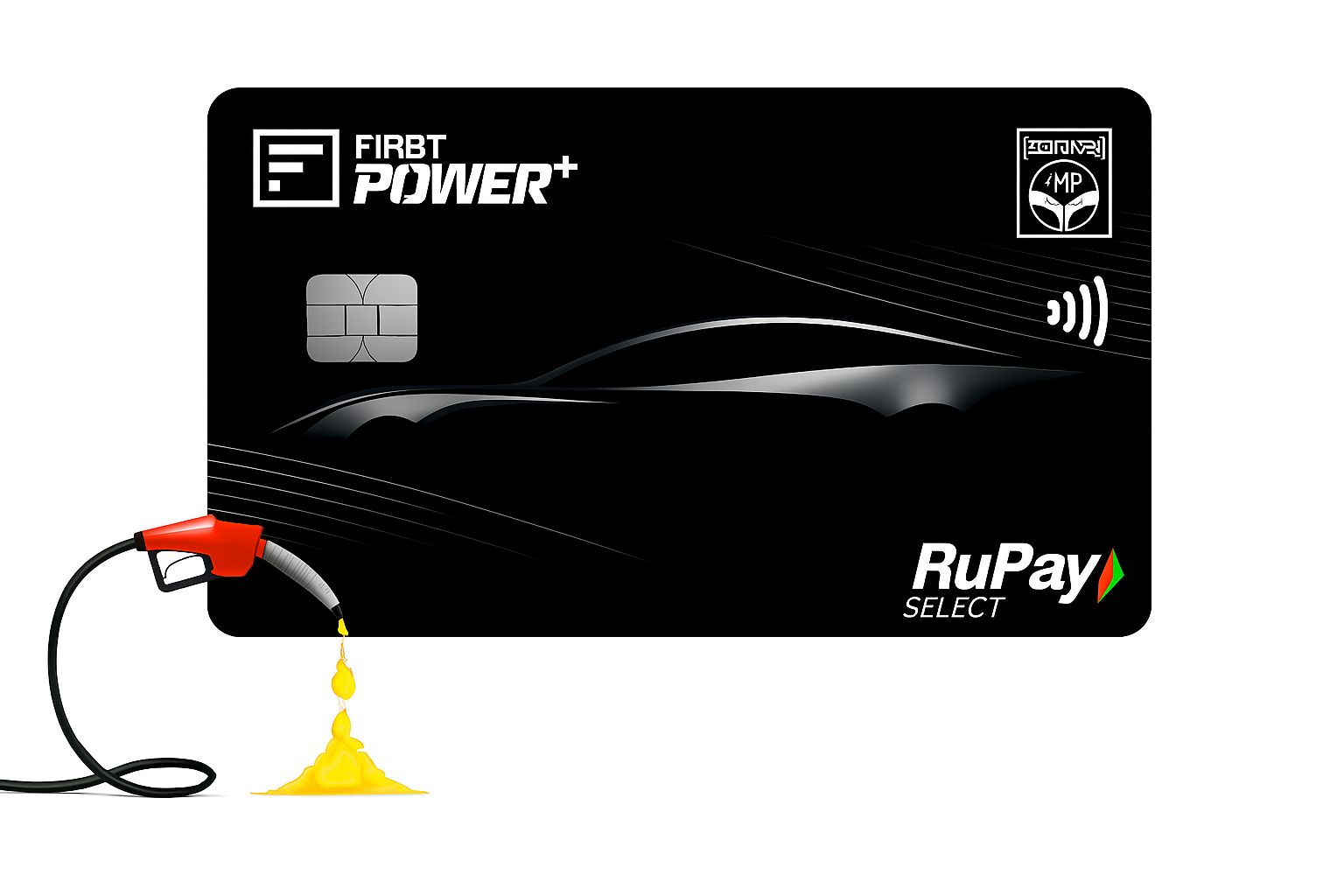
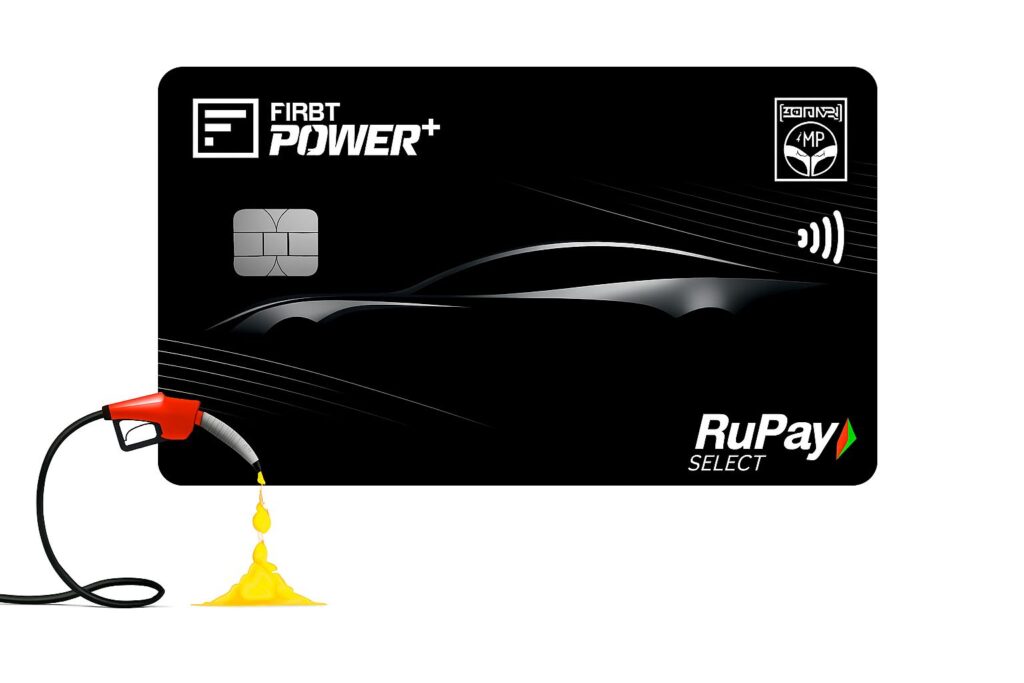
IDFC FIRST Power+ Credit Card

IDFC FIRST Power+ Credit Card

⚡ Fuel Your Life with the IDFC FIRST Power+ Credit Card: More Than Just a Swipe

In a world where every rupee counts and every swipe should mean something, the IDFC FIRST Power+ Credit Card steps in not just as a payment tool—but as a lifestyle enhancer. Co-branded with Hindustan Petroleum Corporation Limited (HPCL), this card is designed for those who live life on the move, value smart savings, and want their everyday expenses to work harder for them.

Let’s dive into what makes this card a powerhouse of perks

🚀 The Power+ Advantage: What Sets It Apart?

The IDFC FIRST Power+ Credit Card isn’t just another plastic rectangle in your wallet. It’s a strategic financial companion that gives you:

▪️Up to 6.5% savings on fuel spends through reward points and surcharge waivers

▪️Accelerated rewards on groceries, utility bills, and FASTag recharges

▪️Lifestyle perks like airport lounge access, movie ticket discounts, and roadside assistance

▪️Low fees with high returns—making it one of the most value-packed cards in its category

⛽ Fuel Savings That Actually Add Up

Let’s be honest—fuel prices aren’t getting any friendlier. But with this card, you can turn every refill into a reward.

▪️6.5% savings on HPCL fuel spends: Earn 30 reward points per ₹150 spent, capped at 2,400 points per billing cycle

▪️Extra 1.5% via HP Pay App: Use HP Pay and earn 6 Happy Coins per ₹100 spent, up to 600 coins monthly

▪️₹500 cashback on your first HPCL fuel transaction in the first month

That’s not just a discount—it’s a fuel strategy.

🛒 Everyday Essentials, Rewarded Generously

Groceries and utility bills are unavoidable. But with the Power+ card, they become opportunities to save.

▪️5% savings on grocery and utility spends: Earn 30 reward points per ₹150 spent, capped at 400 points per cycle

▪️5% savings on FASTag recharges: Perfect for highway warriors, with up to 200 points per cycle

These aren’t just points—they’re your everyday expenses paying you back.—

🎬 Lifestyle Perks That Feel Premium

Who says a fuel card can’t be fun?

The Power+ Credit Card brings a touch of luxury to your routine.

▪️Complimentary domestic airport lounge access: One access per quarter, with a minimum monthly spend of ₹20,000

▪️25% off on movie tickets: Up to ₹100 off once a month—because popcorn tastes better with a discount

▪️Roadside assistance worth ₹1,399: Peace of mind when you’re on the road

Whether you’re traveling for work or play, this card adds comfort to your journey.

💳 Fees That Don’t Feel Like a Burden

Unlike many premium cards that come with hefty price tags, the Power+ card keeps things light:

Fee Type Amount

Joining Fee ₹499 + GST

Annual Fee₹499 + GST

For the benefits it offers, this card punches well above its weight.

🛡️ Safety and Insurance Benefits

Life is unpredictable. The Power+ card offers a safety net:

Personal accident cover of ₹2 lakh

Lost card liability cover of ₹25,000

It’s not just about spending—it’s about protecting what matters.

🔄 Reward Redemption Made Simple

What good are rewards if they’re hard to use? With IDFC FIRST:

1 Reward Point = ₹0.25

Redeem for fuel, shopping, travel, and more

Easy access via the IDFC FIRST appNo hoops. No hidden terms. Just straightforward value.

📱 Digital Convenience at Your Fingertips

The IDFC FIRST app isn’t just a dashboard—it’s your command center:

▪️ rewards and transactions

▪️Redeem points instantly

▪️Access exclusive offers and EMI options

It’s like having a personal banker in your pocket.

🔍 Who Should Get This Card?

This card is ideal for:

  • Frequent drivers who want fuel savings without premium fees
  • Urban professionals who spend regularly on groceries, utilities, and travel
  • Smart spenders who want lifestyle perks without splurging

If you’re someone who values efficiency, savings, and a touch of luxury, the Power+ card is calling your name.

Pros

  • Up to 6.5% savings on fuel transactions
  • Up to 8.83% savings on travel spends
  • Up to 5% savings on IDFC FIRST FASTag, groceries & utilities
  • Movie discount every month

Cons

  • Low reward redemption value of just Rs. 0.25
  • Rewards on fuel spends limited to just HPCL branded fuel purchase
  • No fuel surcharge waiver
  • Lounge access is spend-based

🧠 Final Thoughts: Why It’s More Than Just a Fuel Card

The IDFC FIRST Power+ Credit Card isn’t trying to be everything to everyone. It’s laser-focused on delivering real savings where it matters most—fuel, essentials, and lifestyle. It’s a card that respects your budget, rewards your routine, and elevates your everyday.

So, whether you’re cruising down the highway, shopping for groceries, or catching the latest blockbuster, this card ensures that every swipe is a step toward smarter living.


UPI: Face Authentication and PIN-Free Payments , UPI (Unified Payments Interface)

Face Authentication and PIN-Free Payments

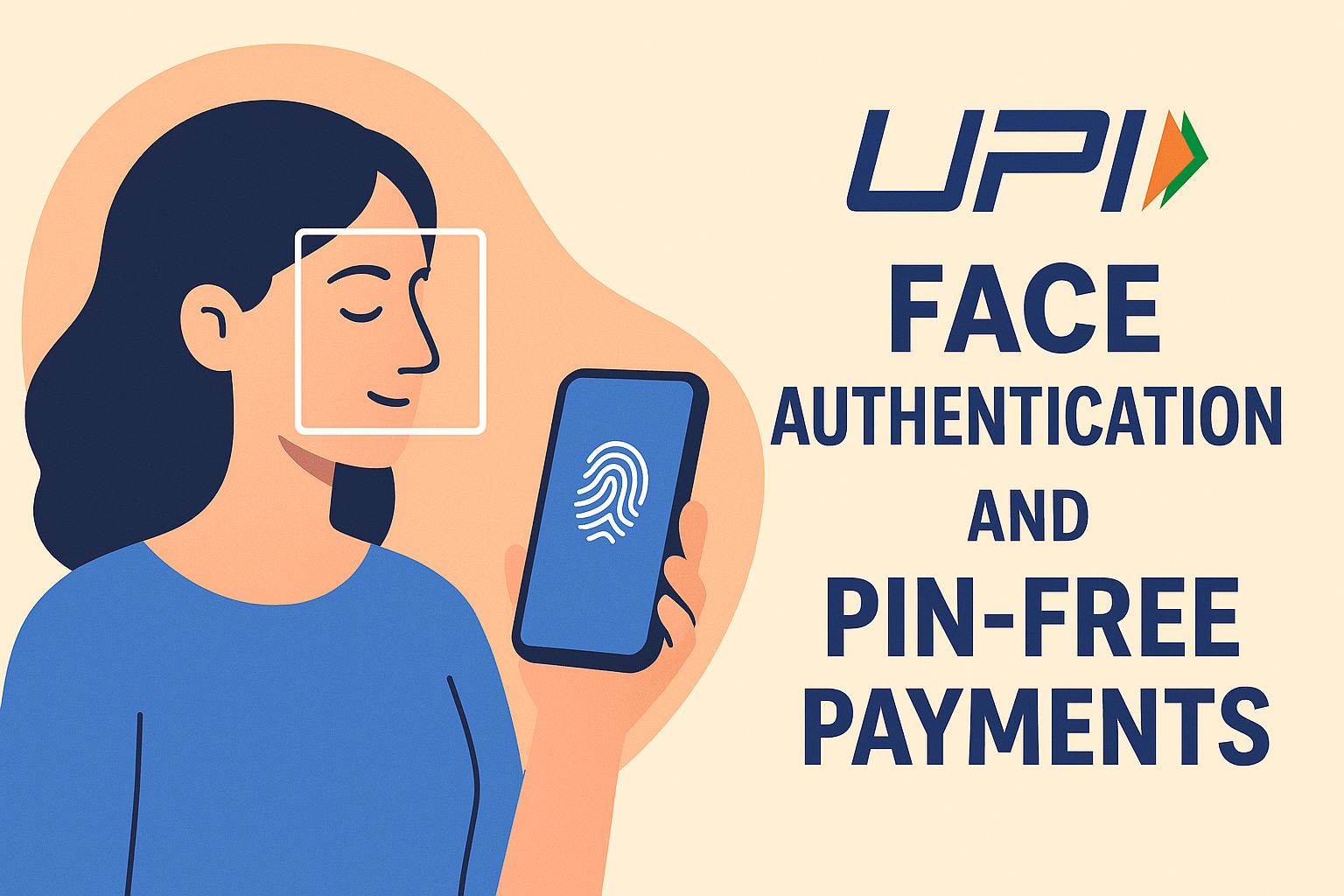
UPI’s New Rules from 8 October: Face Authentication and PIN-Free Payments Explained UPI (Unified Payments Interface) has changed the rules from 8 October. These changes affect how people pay and how apps confirm identity. In simple words, UPI now asks for stronger authentication. One big change is the use of face-based authentication and limiting PIN-free payments.

Face Authentication and PIN-Free Payments

Face authentication allowed: Payment apps can now use face biometrics to approve UPI transactions. This means you may use your face to confirm payments instead of just a PIN or fingerprint.

PIN-free (contactless) limits tightened: Apps that allowed small payments without a PIN or biometric must follow stricter rules. The number and value of such transactions are reduced.

Stronger checks for “trusted devices”: Apps must be careful when marking a phone or device as trusted for quick payments. There are steps to confirm the device and the user.

More transparency for users: You will get clearer information about the authentication method used for every transaction. Apps must show when a face scan or PIN was used.

Why these changes were made

Fraud reduction: Fraud using stolen phones, cloned SIMs, or fake OTPs has been rising. Stronger checks reduce such risks

Regulatory push: Authorities want safer digital payments. UPI is widely used, so stricter rules help protect millions of users.

Evolving technology: Face recognition and better device security are available now. Regulators want to use these tools while ensuring safety and privacy.

User trust: When people feel safe, they use UPI more. Clear rules help build trust.

How face authentication works

▪️Apps will ask to use the phone’s front camera and biometric software.

▪️The software checks your face live — it looks for movement, depth, or other signs to stop fake photos or videos.

▪️Face data is normally processed on the device, not sent to servers. This is called *on-device* processing.

▪️If your face matches, the app approves the transaction. You do not need to type the UPI PIN then.

▪️Many phones already have secure ways to store biometrics. Apps must use these secure methods.

What “PIN-free” or “contactless” payments mean now

▪️Previously, apps allowed small payments without entering the UPI PIN. This made quick purchases easy.

▪️New rules limit how many such PIN-free payments a user can make in a row and their total value.

▪️Apps must ask for stronger checks periodically, for example after a set number of transactions or after reaching a value threshold.

▪️For large purchases, you will still need to use the UPI PIN or biometric authentication.

Benefits for users

Better security: Face checks reduce the chance of unauthorized payments.

Convenience: For small, quick payments, face authentication is faster than entering a PIN every time.

Transparency: You’ll know what method was used to approve your payment.

Device-level privacy: When done on-device, your face data stays on your phone.

Concerns and cautions

Privacy worries: Some people worry about apps storing face data. Ask apps how they handle biometric data and whether it stays on your device.

Phone compatibility: Older phones may not support secure face authentication. If your phone is old, you may still need to use a PIN.-

False rejections: Poor lighting or camera problems may cause failed face scans. Apps must provide easy fallback methods like PIN or fingerprint.

Shared devices: If you share a phone, face-based approvals can be risky. Use separate accounts or avoid registering face biometrics on shared phones.

What payment apps must do

▪️Use secure, certified biometric systems that check for live faces (to prevent spoofing).

▪️Store biometric templates in secure areas of the phone (such as a secure enclave).

▪️Limit PIN-free transactions and prompt for stronger checks when rules call for them.

▪️Show clear prompts telling users when the face scan is being used.

▪️Provide easy fallback options if face authentication fails (for example, use a PIN).

▪️Keep logs and show transaction details that indicate what authentication method was used.

What users should do

▪️Update your payment apps when updates arrive. Newer versions will have the required security features.

▪️Read app permissions and privacy policies. Check if the app keeps your biometric data on the device.

▪️Keep your phone software up to date. Security patches help keep biometric systems safe.

▪️Use a strong phone lock (PIN, pattern, password) in addition to biometric locks.

▪️Avoid registering face data on phones you share with others.

▪️For important or large transactions, prefer using UPI PIN or fingerprint if you are not comfortable with face scanning.

▪️If you lose your phone, report it to your bank and block the UPI app immediately.

How this affects merchants and small businesses

Faster checkouts: Face authentication can make payments quicker when customers approve with a glance.

Training staff: Staff should learn when customers might need a PIN or alternative method, and how to handle failed scans.

Device choices: Merchants will need phones or QR devices that support the new secure authentication methods.

Fraud prevention: Stricter rules can cut down losses due to fake payments or unauthorized access.

A few practical scenarios

Buying coffee: You scan a QR code, confirm with a face scan. Payment completes in seconds without typing a PIN.p

Grocery run: Several small purchases may go through without a PIN — until the app requires a PIN after a few transactions or a limit is reached.

Shared phone: If someone borrows your phone, they should not be able to pay using your face. Do not register your face on shared devices.

Lost phone: If your phone is stolen, the thief cannot easily pay if the phone requires biometric checks and your lock is strong. Still, report and block the app.

Final thoughts

The new UPI rules from 8 October bring stronger safety and modern convenience. Face authentication can speed up small payments and reduce fraud. But users should stay aware of privacy and compatibility issues. Update apps, check permissions, and use fallback methods when necessary.Overall, these changes aim to make UPI safer while keeping it easy to use. With common-sense precautions, most people should benefit from faster and more secure payments.

MUDRA Loan Scheme (Pradhan Mantri Mudra Yojana, PMMY)

MUDRA Loan Scheme (Pradhan Mantri Mudra Yojana, PMMY)

MUDRA Loan Scheme (Pradhan Mantri Mudra Yojana, PMMY)

MUDRA Loan Scheme: Fueling India’s Micro Entrepreneurs

When we think of India’s economic engines, we often picture big factories, tech parks, or exports. But many of the jobs, ideas, and livelihoods are built in small units: a roadside tea stall, a tailoring home, a local repair shop, a small café, a mobile recharge kiosk. These micro businesses often lack access to formal credit — lenders ask for collateral, complex accounts, or high paperwork. That’s where MUDRA comes in.

MUDRA stands for Micro Units Development & Refinance Agency. The Pradhan Mantri Mudra Yojana (PMMY) was launched in 2015 to “fund the unfunded” — to extend loans to non‑farm, non‑corporate micro enterprises, often without collateral, so they can grow, scale, and generate jobs.

🏛 What Is MUDRA Loan / PMMY?

MUDRA is not a separate bank; it is a refinance and development arm created by the Indian government to support small units. Under PMMY, banks, NBFCs, MFIs, and cooperatives provide micro‑loans to small businesses. The role of MUDRA is to provide refinancing support and guarantee/subsidy frameworks.

The core idea: small units often cannot access loans because of lack of collateral, small amounts, or high risk perception. MUDRA bridges that gap by offering *collateral-free loans*, easier access, and a structure that de-risks lending for financial institutions.

When launched, the target was huge: funding millions of small businesses across India, in urban and rural areas alike.

📂 Categories / Types of MUDRA Loans

To match needs of different stages of entrepreneurship, MUDRA loans are divided into categories: | Category | Loan Limit | Best Use Case

Shishu : Up to ₹50,000 For new or very small enterprises starting out

Kishore : Above ₹50,000 up to ₹5,00,000 For growing enterprises needing capital to expand

Tarun : Above ₹5,00,000 up to ₹10,00,000 | For established small businesses looking to scale further

Tarun Plus : Above ₹10,00,000 up to ₹20,00,000 | A newer category (from 2024) for borrowers who have already repaid a prior Tarun loan successfully

Recently, in the 2024 budget, this Tarun Plus category was introduced, effectively doubling the top limit for qualified borrowers.

These categories allow the scheme to cater to a wide spectrum — from fresh micro enterprises to ones ready for larger capital infusion.

✅ Eligibility Criteria & Key Conditions

To qualify for a Mudra Loan, certain basic eligibility conditions must be met:

Applicant must be an Indian citizen (resident).

The enterprise must be non‑corporate, non‑farm in nature (i.e. not large agricultural or corporate operations).

Age requirement: generally 18 to 65 years (varies slightly by lender).

The business should be income generating — e.g. manufacturing, trading, services, repair, shopkeeping, artisanal, small units, etc.

Proper documentation (identity proof, address proof, business plan, bank statements, etc.).

Some additional technicalities:

▪️ Loans under the scheme are collateral‑free (no security or mortgage required) up to the scheme caps.

▪️These loans are often covered under a Credit Guarantee Fund (CGFMU / MUDRA Guarantee) so that lenders have protection against default risk.

▪️The interest rate is set by the lending institution based on guidelines, risk, and credit profile. It is not uniform.

Thus, MUDRA reduces the barriers to credit — especially for those with limited assets but with viable business plans.

💸 Interest Rates, Repayment, Tenure & Fees

Interest Rates

Interest rates under the MUDRA scheme are not fixed by a single uniform rate. Instead, they depend on:

▪️The lending institution’s policy

▪️The risk profile of the borrower

▪️The nature of the business

The category (Shishu, Kishore, Tarun) Typically, these rates are lower than many unsecured commercial loans but higher than large industrial credit rates. Some sources suggest ranges around 9% to 12% per annum, though actual rates vary.

Tenure / Repayment Period

The maximum tenure is linked to the *economic life of the assets you create (machinery, inventory) and your cashflow.

For Shishu, the repayment period can extend up to 5 years in some cases.

For other categories, term is typically up to 3 to 5 years depending on viability and agreement.

Processing Fees & Charges

▪️Many banks waive processing fees for Shishu category.

▪️Lenders may charge a small upfront fee or documentation charges under their internal guidelines.

▪️No collateral means you won’t bear costs of valuation, but you must comply with guarantee or credit guarantee fund terms.

Foreclosure / Prepayment

▪️Most lenders allow prepayment / foreclosure without additional penalty under this scheme, but this depends on specific bank norms. (Check with your lender)

▪️Because borrowers are small, many prefer to clear early if cash allows to reduce interest burden.

🎯 Major Benefits and Why It Matters

1. Access to Credit for Small Units

Many micro businesses operate outside the formal banking sphere. MUDRA brings them into the system, enabling access to institutional credit rather than relying on informal lenders.

2. Collateral-Free Loans

This is a game-changer: loans without security relieve entrepreneurs who don’t own property or large assets.

3. Job Creation & Economic Growth

Small units financed under MUDRA help generate employment locally, especially in Tier II/III towns. The multiplier effect is strong.

4. Women & Marginalized Inclusion

Over the years, a major share of MUDRA credit has gone to women entrepreneurs. Reports show ~67% accounts are women.

5. Support for “Make in India” & Self‑Reliance

MUDRA aligns with national goals of encouraging local manufacturing, micro production, and reducing dependency on imports. It supports micro units in agriculture allied, services, and retail.

6. Encouraging FormalizationCIBIL score tips

When micro units get institutional credit, they often adopt better accounting, compliance, and formal business habits — which can support further growth and investment.

7. Credit Guarantee Protection

With a guarantee fund in place, lenders face lower risk, making them more willing to lend to micro borrowers.

🛠 How to Apply / Steps & ProcedureHere’s a step-by-step guide:

1. Decide your category (Shishu / Kishore / Tarun / Tarun Plus) based on your business need.

2. Prepare documents: identity proof, address, business plan, bank statements (last 6 months), quotations, income proof (if any), GST or Udyam registration (if applicable).

3. Choose a lender: any bank / NBFC / MFI / cooperative which is part of the PMMY network.

4. Visit bank branch / apply online: many banks and platforms now allow online application via UdyamMitra or JanSamarth portals.

5. Submit application & conduct bank scrutiny: the lender will evaluate your business viability, cash flows, documents, and risk.

6. Disbursement & sanction: if approved, funds will be released to your account, often within days.Scapia Federal Credit Card — Travel, UPI & Rewards United

7. Repayment: Start paying EMIs as scheduled. Maintain discipline.

Some borrowers report friction in the process — delays, asks for extra documentation, or subjective judgments. E.g., one startup founder described visiting multiple banks, being asked odd personal questions, and being delayed.

Challenges, Issues & Criticism

1. Implementation Delays & Rejections

Many eligible entrepreneurs complain that banks delay, demand extraneous documents, or deny even clear cases — the on-ground odds are harder than theory.

2. Fraud & Misuse

There have been reported cases of fake companies taking MUDRA loans and defaulting. For example, in Uttar Pradesh, fraudulent enterprises received loans under facade projects.

3. Interest Rate Burden

The interest rates, though better than some informal lending, can still be high for small businesses with tight margins — making repayment difficult. Some Reddit users point this out.

4. Over‑Rigid Bank Practices

Some banks demand collateral or additional guarantees even when not needed under scheme guidelines. That violates MUDRA principles.

5. Credit Limit Cuts / Arbitrary Decisions

Even after sanctioning, some borrowers report sudden reductions in credit limit or changes in terms.

6. Underutilization & Exclusion

Some small units do not apply because they lack awareness or fear the process. Also, some geographies / small banks may not actively promote or service MUDRA credit well, leading to uneven reach.

🔄 Recent Changes & Updates

As per the 2024–25 Union Budget, the MUDRA loan limit for eligible borrowers (Tarun category) has been raised to ₹20 lakh (Tarun Plus).

The government continues to allocate funds and push disbursements: in FY24, disbursal target was ₹5,00,000 crore under PMMY.

In FY25, more than 4.79 crore loans were sanctioned amounting to ~₹5,02,782.13 crore.

There is increasing focus on digital application, faster processing, and improving outreach, especially in rural areas.

These changes aim to broaden reach and ease access further, though challenges remain.

Tips & Best Practices for Applicants

▪️Prepare a clear business plan and projections — lenders look at viability.

▪️Maintain clean financials / bank statements for 6+ months.

▪️Be consistent in your document submission — missing or error in address, ID, or quotations can derail the loan.

▪️Choose the right category — don’t ask for more than you need; start with Shishu / Kishore if applicable.

▪️Approach small / local branches familiar with micro credit routines.

▪️Use digital portals (UdyamMitra, JanSamarth) for preliminary approval or pre-check.

▪️Monitor your repayments; avoid default.

▪️If rejected, don’t take no immediately — ask for reasons, escalate, try a different bank.

▪️Document every step — keep receipts, emails, acknowledgments.

🔮 Future Outlook & Suggestions

Better digital onboarding: full online end-to-end processing, e-KYC, minimal paperwork.

Stronger supervision & accountability: audits to reduce fraud, misallocation, or default.

Rate rationalization: bring interest rates down further or provide sliding subsidies for very small units.

Customized packages by sector: agro, artisans, tech micro startups can have tailored sub-schemes.

Greater outreach & awareness campaigns in remote, backward regions.

Partnerships with fintechs to assess credit risk using alternative data (GST, sales data) and reduce rejections.

🧾 Summary & Closing ThoughtsThe

MUDRA Loan Scheme / PMMY is a bold, visionary policy to empower micro entrepreneurs, ensure financial inclusion, and build grassroots growth. It offers collateral-free credit, multiple categories to suit business needs, and a pathway for small units to move into formal banking.

But the road is not smooth: implementation gaps, delays, rejection behaviors, defaults, and misuse are real challenges. The success of MUDRA will depend not just on policy design, but on execution, oversight, and continuous iteration.

If you or someone you know is planning to start a micro business — MUDRA offers one of the best available routes for credit. But go in prepared, informed, and with realistic expectations.

AU LIT Credit Card : Features and Benefits

AU LIT Credit Card

AU LIT Credit Card

AU Bank’s LIT (Live It Today) Credit Card stands out. It is India’s first customizable credit card — meaning you can choose which features and benefits you want, and even switch them on or off as needed.

This card is especially targeted at Gen Z and Millennials who want more control, fewer unused features, and a card that adapts with their life. Let’s walk through its features, how to use it smartly, its drawbacks, and whether it’s worth having.

🔍AU LIT Credit Card Key Features & Benefits

Customization at the Core- With LIT, you pick which benefits / features you want via the AU 0101 app.

You only pay for the features you activate; you can also turn off features if you don’t want them.IDFC FIRST Millennia Credit Card

These features stay active typically in 90‑day blocks (so you choose feature + duration) and then you can renew or turn off.

This flexibility helps you avoid paying for perks you never use.

Rewards & Cashback Mechanics

Accelerated Reward Points: On both online and offline spends (domestic & international), you can earn 10× or 5× reward points if you choose that feature.

Base Reward Points: All other eligible spends (non-accelerated) earn 1 reward point per ₹100 spent.

Milestone Cashback: If you reach certain spending thresholds in a 30-day cycle or over 90 days, you can get 5% or 2% cashback (in addition to reward points) for retail spends.

E.g. Spend ₹7,500 → 5% cashback (cap applies) [4] – Or other slab: ₹10,000 → 2% cashback Kiwi UPI Credit Card: Features And Benefits

Category Cashback: On categories like grocery, apparel, you get 5% additional cashback (besides the base reward points) for those spends. Usually up to a maximum per month in that category

Fuel Surcharge Waiver: When you refuel between ₹400 and ₹5,000, you get 1% waiver on fuel surcharge if conditions are met.

Lounge Access: Up to 2 domestic lounge visits per quarter (so 8 per year) for holders.

Memberships & Subscriptions: 3 months of ZEE5 membership free / 3 months Amazon Prime Cult.fit / fitness / entertainment perks (depending on features)

Fees, Interest & Charges

Lifetime Free: No joining fee and no renewal / annual fee.

Interest / Revolving Credit Rate: ~3.49% per month (≈ 41.88% per annum) on unpaid balances.

Cash Advance Charges: 2.5% of amount withdrawn (min ₹100)

Late Payment Charges:

Tiered slabs: – ≤ ₹100: Nil – > ₹100 up to ₹500: ₹100 – > ₹500 up to ₹5,000: ₹500 – > ₹5,000 up to ₹10,000: ₹700 – > ₹10,000 up to ₹20,000: ₹800

Reward / Cashback Caps: Maximum points or cashback per statement cycle or per category apply.

Accelerated reward points / features are not applicable* on fuel, rent, cash withdrawal, EMI, etc.

Foreign Currency Markup: Probably ~3.49% — check variant (for international spends).

🛡 Real‑World Caveats & User Experiences

While the features look great, some users have faced issues:

Hidden / Feature Pricing Charges: A user found a ₹59 “Membership Feature Pricing” charge even though they had not activated any add-on features.

Reward / Cashback Denial: A user claimed they activated 10% / 5% features, but after purchase, those features didn’t apply because the transaction date / activation sank into “before activation” logic.

One‑card policy / Restrictions: Some users report that once you hold LIT, you may be blocked from applying for some AU co‑branded cards (e.g. Ixigo).

Foregin transactions mischarged: One user says an Agoda booking in INR was charged foreign transaction fees.

These experiences suggest you must track your statements and feature activations carefully.

🔧 How to Use AU LIT Smartly

To get real value from LIT:

1. Activate only features you’ll use — since it’s customizable, don’t turn on everything.

2. Time your activation — ensure that you activate a feature before relevant transactions to benefit from it.

3. Plan for milestone / cashback cycles — if 5% cashback is tied to ₹7,500 spend, try to hit it.

4. Use for grocery, apparel, travel, dining — categories where 5% extra is available.

5. Refuel only in the ₹400–₹5,000 slab when surcharge waiver is applicable.

6. Maintain clarity in which spends get rewards / which are excluded — e.g. fuel, EMI, rent often excluded.

7. Redeem lounge access through the AU app / manage in app — don’t assume automatic.

8. Monitor statements carefully — check for hidden charges or feature fees you didn’t enable.

Is AU LIT Right for You?

You should consider LIT if:

You prefer flexibility and want to pick / choose features.

Your spending is concentrated in categories like grocery, travel, dining, apparel.

You want a lifetime free card (no annual charge).

You are comfortable with digital management (AU 0101 app) and monitoring features.

🎯It may not suit you if:

Your spending is very diverse and many categories don’t get additional perks.

You dislike having to actively manage features.

You often make large fuel transactions out of the eligible slab or do many cash withdrawals.

You want strong premium perks (international lounges, luxury travel, etc.) LIT is more mid / lifestyle than ultra premium.

🏁 Final Thoughts

AU LIT is ambitious — a credit card that says “you pick what you want”. That is rare in India’s credit card space. The ability to add, remove, or switch benefits gives it an edge for people who dislike paying for unused features.

If used smartly — activate features you will use, hit milestone spends, and avoid trap categories — it can deliver solid value. But don’t let marketing hype fool you — the “customizable” model comes with responsibility: tracking, planning, and vigilance.

Jupiter Edge+ CSB RuPay Credit Card

Jupiter Edge+ CSB RuPay Credit Card — features, benefits, drawbacks, and tips

Jupiter Edge+ CSB RuPay Credit Card

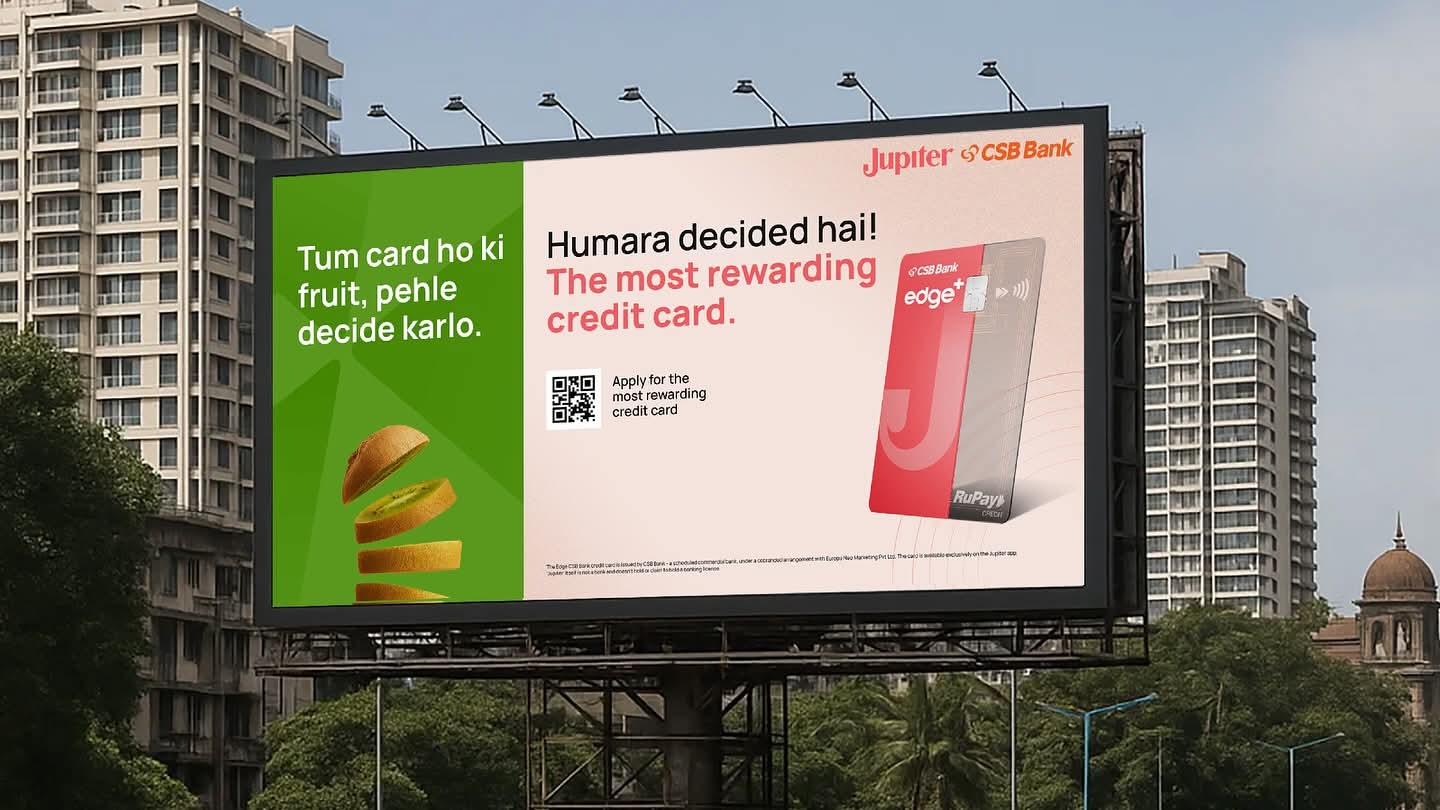
A New Era of Rewards + UPI Integration In June 2025, Jupiter upgraded its existing Edge CSB RuPay credit card into a more powerful version called Edge+. The goal? To give users more cashback, more simplicity, and deeper UPI integration.

If you want to know whether Edge+ is worth having, here’s a complete guide.

🔑 Key Features & Benefits

1. Cashback / Rewards Structure

One of the biggest changes in Edge+ is the reward rates:

10% cashback on major shopping brands (Amazon, Flipkart, Myntra, Nykaa, Croma, Tata CLiQ, and select others)

5% cashback on travel bookings (MakeMyTrip, Yatra, EaseMyTrip, Cleartrip, etc.)

1% cashback on all other eligible online & offline spends (uncapped)

These cashbacks are given in the form of Jewels, where 5 Jewels = ₹1

There are caps for the higher rates:

Shopping cashback cap: up to ₹1,500/month

Travel cashback cap: up to ₹1,000/month

All other spends (1%) have no upper limit.

2. Fees & Lifetime Free Status

Joining fee: ₹499 + GST (one time)

Annual fee / renewal fee: None (lifetime free) [2]

So you pay just once, and after that there’s no recurring fee.Kiwi UPI Credit Card: Features And Benefits


  1. UPI + QR Payment Integration

Because Edge+ is a RuPay card, Jupiter allows you to “Scan & Pay” QR/UPI using the credit line instead of debit. This means you can use the card in places that accept UPI transactions.

This integration is a standout feature; many credit cards don’t support UPI payments.


  1. Other Features
  • Fuel surcharge waiver: 1% waiver on fuel spends between ₹400 and ₹3,000 (up to a limit)
  • EMI conversion option: You can convert eligible spends (including UPI or credit card spends) into EMI starting at ~1.33% interest (terms may vary)
  • Tracking & controls in app: Freeze/unfreeze card, set limits, view insights, monitor UPI and credit spend separately
  • Welcome offers: In some offers, new applicants get Amazon Prime (1 year) or similar benefits.
  • Lifetime free for users (no annual fee ever) after the one-time joining fee.

⚠ Important Points & Drawbacks

A. Capping & Vendor-wise Limits

While shopping cashback is 10%, you might hit vendor-wise caps. Some users report that once a single brand’s cap is reached, further spend on that brand gives zero additional reward, even if your total shopping is within your overall limit.

B. Refunds & Reward Reversal Issues

Some users state that when a purchase is refunded, while Jewels are reversed, the reversed amount still counts towards the cap. This means future spends might not fetch expected rewards.

C. Credit Limit Reduction

There are cases where a card’s credit limit was slashed drastically without clear reason, even for consistent users.

D. Transaction Rejections

Some users mention that large or certain types of transactions (POS or online) are sometimes declined.

E. Misleading Marketing / “3‑in‑1” Claims

Earlier, Jupiter’s Edge was marketed as “3-in-1” (shopping + travel + food). But in practice, only one category got the higher rate. Some users feel the Edge+ marketing improves this, but they’re cautious given past confusion.

F. Joining Fee Upfront

Even though the card is “lifetime free” thereafter, you still need to pay ₹499 + GST at issuance. For some users, this one-time cost is a barrier.

🎯 Who Should Get Edge+ CSB RuPay Credit Card?

This card is suitable for:Axis Neo Card Benefits

Heavy shoppers in brands like Amazon, Flipkart, etc.

Frequent travelers who book flights, hotels, or travel via portals.

Users who use UPI/QR frequently and want to earn on it.

People who dislike annual fees but still want a credit card with strong rewards.

But maybe skip it if:

Much of your spending is in categories that fall under the 1% bracket.

You expect premium perks like lounge access, airport benefits, or insurance beyond basics.

You’re likely to do many refunds, which might eat into your rewards.

You rely on very large transactions which risk rejection.

📈 Example EarningsLet’s imagine you have this usage in a month:

₹10,000 shopping on Amazon & Flipkart – ₹5,000 travel booking – ₹15,000 in other spends Rewards:- Shopping: 10% of ₹10,000 = ₹1,000 (Jewels equivalent) – Travel: 5% of ₹5,000 = ₹250 – Others: 1% of ₹15,000 = ₹150 Total = ₹1,400 in rewards for that month (assuming you don’t hit caps)

🧾 Final Thoughts

The Jupiter Edge+ CSB RuPay Credit Card is an exciting card for today’s digital consumer. It builds on Edge’s foundation by offering stronger reward rates, better simplicity, and deeper UPI integration. The one-time joining fee is a small price if you use it actively.

Kiwi UPI Credit Card: Features And Benefits

Kiwi UPI Credit Card

What is a Kiwi UPI credit card?

A Kiwi UPI credit card is a payment card designed to work with the Unified Payments Interface (UPI) system in India. UPI is the digital highway that lets you transfer money instantly between bank accounts, pay merchants, and split bills—usually with a quick scan or a simple identifier like a virtual payment address. A credit card linked to UPI adds the convenience of paying on credit, while still tapping into the easy-to-use UPI ecosystem.

In short:

It combines credit with UPI-style payments.You can make purchases and pay later, up to your credit limit. It often integrates with merchant apps and wallets that support UPI.

Key features

While specific offerings can vary by issuer and evolving policies, here are common features you’ll encounter with Kiwi UPI credit cards:

Linked to UPI for quick payments: Tap into the UPI network for seamless checkout experiences, both online and offline.

Credit facility: Borrow money up to a predetermined limit for purchases, with a monthly or cycle-based billing plan.Slice Credit Card

Interest-free or low-interest grace period: Some cards offer a grace period on purchases if you pay the full balance by the due date.

Rewards on spends: Earn points, cash back, or other perks for eligible transactions, often boosted for certain categories like groceries, bills, or dining.

Cashback and discounts: Occasional offers at partner merchants or category-specific savings.

Digital onboarding: Quick online activation, with instant or near-instant virtual card numbers for online shopping.

Security features: PINs, card verification codes, and sometimes dynamic CVV or on-device fraud protection.

Contactless payments: Tap-to-pay options for faster checkouts where supported.

Statement and tracking tools: Easy-to-use mobile or web dashboards to monitor spends, due dates, and rewards.

Split payments and peer-to-peer: Some integrations allow you to split a bill or pay friends via UPI-like features.

Benefits in everyday life

Here’s how Kiwi UPI credit card perks can play out in daily routines:

Convenience when you shop online: Pay with credit while the checkout flow remains smooth and familiar.

Better cash flow management: The credit line gives you flexibility for larger purchases, spreading costs over time (subject to terms).

Rewards that feel useful: Points or cash back can add up, especially if you use the card for recurring bills or everyday purchases.

Frequent discounts: Targeted offers can reduce costs on dining, groceries, or travel.

Built-in protection: Many cards come with purchase protection, fraud monitoring, and dispute resolution pathways.Best cashback credit card

Budget-friendly awareness: The statements help you see where your money goes, especially if you set alerts for due dates and caps on categories.

How to use it wisely

To get the most value out of a Kiwi UPI credit card, consider these practical tips:

Pay on time, every time: Late payments can incur interest and penalties, and they can affect your credit score. Set reminders or enable autopay if available.

Understand the grace period: If you pay your full statement balance by the due date, you may avoid interest on purchases. Know when it applies and any exclusions.

Know your rewards structure: Different purchases earn different rewards. Use the card for transactions that maximize your return, and be wary of spending just to earn points.

Watch category boosts and caps: Some offers have monthly limits or cap out after a certain amount. Plan ahead to take advantage of high-value deals.

Keep track of fees: Annual charges, foreign transaction fees, or additional service fees can negate rewards. Compare the cost against the benefits.

Secure your card details: Don’t share your PIN, CVV, or OTP, and be cautious with online merchants. Use trusted apps and two-factor authentication where possible.

Monitor your statement: Regularly review charges. If something looks off, report it quickly and follow the card issuer’s dispute process.

Plan for big purchases: If you need a chunk of credit for a major expense, check the repayment options and interest rate. A plan helps you avoid debt traps.

Things to watch out for

Being informed helps you avoid common pitfalls:

Interest on carried balances: If you don’t pay the full balance, you’ll likely pay interest on the remaining amount.

Fees stacking up: Annual fees, late payment fees, or cash advance charges can accumulate fast.

Over-reliance on credit: It’s easy to overspend when credit feels “free” for the month. Keep a tally of what you’re charging.

Credit score impact: Opening a new line of credit can affect your score temporarily. Responsible use over time usually improves it.

A fresh lens: a narrative approach to using a Kiwi UPI credit card

Let’s imagine two everyday moments and how the Kiwi UPI credit card might change the feel of each.

Day 1: Grocery run

You use your Kiwi UPI credit card for the weekly groceries. You earn rewards on staples, and you remember to pay the statement balance on time to keep interest low. The receipt shows the savings from a category promo, and you feel a small win at the end of the month.

Day 2: Weekend dining and a spur-of-the-moment gift

A friend’s birthday gift pops up at the last minute. You charge the gift to your Kiwi UPI credit card and use the rewards to offset part of the bill. You check the offer for dining out, and you notice a limited-time discount that fits your budget. You pay the full balance when the bill arrives to keep the cycle clean.

This lens isn’t just about spending. It’s about turning everyday transactions into a rhythm that supports your financial goals—without turning every purchase into a calculus problem.

Simple checks before applying or using

If you’re considering this card, here are quick checks to make sure it fits your needs:

Are there clear terms on the credit limit, interest rate, and grace period?-

What is the annual fee, if any, and is there a waiver for the first year?

How robust are the rewards, and do they align with your typical spending?

Are there meaningful merchant partnerships or category-specific perks you actually use?

How strong are the security features and customer support options?

How to get started

Getting started is usually a straightforward path:

1. Check eligibility: Income level, age, and residence requirements.

2. Gather documents: Identity, proof of address, and financial details as requested.

3. Complete the application: Online steps are common, with instant or near-instant approval in many cases.

4. Activate and set up: Link to your UPI app, set spending limits if the option exists, and configure alerts.

5. Start smart: Plan a small initial purchase to familiarize yourself with the flow and billing.

Summary

The Kiwi UPI credit card blends credit with the convenience of UPI payments.

It typically offers rewards, potential cash back, and security features designed for easy, everyday use.

Practical tips include paying on time, understanding the grace period, and using rewards for high-value categories.

Start with clear checks on costs, perks, and compatibility with your spending style.

With thoughtful use, it can be a helpful tool for managing everyday purchases, budgeting, and earning rewards.

RBI’s 3‑Days Grace Period on Credit Card Bill Payment

3‑Days Grace Period on Credit Card Bill Payment

RBI’s 3‑Days Grace Period on Credit Card Bill Payment

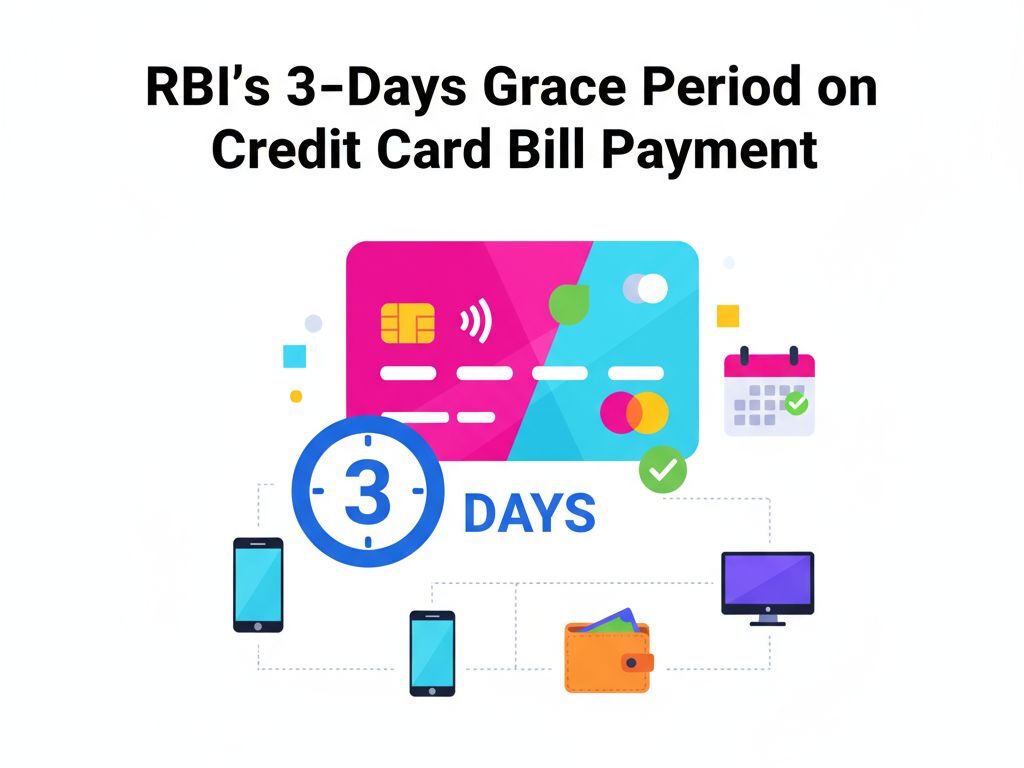
🕒 RBI’s 3‑Day Grace Period: A Lifeline for Credit Card Users Have you ever missed your credit card payment by a few hours or even a day? Panic sets in — thinking of late fees, bad credit score hits, and calls from banks. But did you know that RBI’s rules allow a 3‑day grace period before banks can penalize you or report defaults? This buffer can come as real relief — if you know how it works.

In this, we’ll walk through:

What the 3‑day grace period means – Which rules or guidelines enforce it – How banks can (and cannot) act in those days – What advantages this gives you – Things to watch out for, limitations, and real user experiences – Steps you should take to use this grace period wisely

Let’s beginRbi rules 2025

📜 What Exactly Is the 3‑Day Grace Period? Under the RBI Master Direction — Credit Card & Debit Card — Issuance and Conduct Directions, 2022, there is a key clause:

“Card issuers shall report a credit card account as ‘past due’ to credit information companies (CICs) or levy penal charges, viz. late payment charges and other related charges, only when a credit card account remains ‘past due’ for more than three days.”

In simpler language:

If your due date is Day 0, banks cannot impose late fees, penal interest, or report you as “past due” till Day 3 (i.e. the first three full days after the due date).

Only when you cross into Day 4 (i.e. more than three days late) can banks start charging penalties or reporting to credit bureaus.

The penalty / late payment charges must be calculated only on the outstanding amount still unpaid after the due date, not on the entire billed amount.

Changes in penalty structure or fee structure must be notified to customers in advance (prospective changes).

So this grace is legally mandated for all credit card issuers in India to protect consumers from harsh immediate penalties.

What You Gain from This Rule

1. Breathing Room in Case of Delay

Life happens — you may miss payment due to forgetfulness, internet issues, banking holidays, or paycheck delay. The 3-day rule gives you buffer time to settle your due without penalty.

2. Avoiding Immediate Credit Score Hit

You can clear the due within three days, and your account will not be reported to credit bureaus as “past due.” In effect, your credit history remains safe.

3. Transparency & Fairness Mandate

Banks must clearly disclose these rules in billing statements and terms. So you should see a warning like “If payment not cleared within 3 days, account becomes past due.”

4. Reduced Panic, More Control

Knowing you have this buffer reduces stress. It gives you time to arrange funds and make payment without caving under immediate pressure.

🚧 Important Limitations & How Banks Can Act

The grace period is beneficial, but it’s not a magic shield. Here are key things to watch out for:

A. Interest May Keep Accruing

Even if penalty or late fee is not imposed within the first 3 days, interest on unpaid balances might continue to accumulate depending on the card’s terms.

B. Banks May Delay Reversal

Some users report that banks charged fees in error even when payment was made within grace period — but they reversed when customers raised the claim.

C. Third‑party Payment Delays

If you pay via third-party apps (e.g. wallet, aggregator) that take time to settle, that may push your effective payment beyond the grace window. The bank may argue late arrival. Some users report this issue.

D. Misreporting to Credit Bureaus

Some credit card users claim that even after paying within 3 days, banks reported their accounts as past due. That violates the rule but may still happen.

E. Bank Discretion on Waiving Charges

If a bank accidentally charges a fee, it may waive it if you escalate, especially if you are a good customer. But it’s not guaranteed.

🧪 Real User Stories & Anecdotes

One user paid 1 day late but fell within the grace window — the bank initially charged a late fee but reversed it when the RBI rule was quoted.

Another user found that SBI reported a “days past due” entry despite payment in 3 days; the user had to escalate and ask for correction.

Yet another shared payment delay due to app settlement timing – even though made within 3 days, the card issuer insisted on penalties, claiming settlement delay. This shows grey area when using intermediary apps.

These real stories reflect that rules and their enforcement sometimes diverge, which is why you should proactively monitor your statements.

🛠 How to Use the Grace Period Wisely (Don’t Abuse It)

1. Set reminders before your due date — use calendar, phone alarms

2. Prefer direct payments via bank’s native app or net banking for instant settlement

3. Avoid using delayed payment apps unless you know their processing times

4. Make payment within first 3 days if you miss the due date — that’s your cushion

5. Check your credit score report after payment — ensure no reporting error

6. If wrongly penalized or reported, escalate via customer care, nodal officer, and if needed, regulator (RBI grievance portal)

7. Don’t rely on grace as habit — frequent late payments (even within grace) can harm trust with the issuer

8. Understand your card’s interest clause — grace only shields penalty, not interest, in many cards

📚 What RBI Rules Guide This Grace Period – Master Direction – Credit Card & Debit Card — Issuance and Conduct Directions, 2022, Section 9(b)(v): > “Card‑issuers shall report … or levy penal charges … only when a credit card account remains past due for more than three days.” [1] – Rule also says late payment charges should apply only on the unpaid portion after due date, not entire billed amount.

– The same direction requires that card issuers explain clearly the implications of minimum payments, past due status, transparent billing cycles, etc.

Thus, the grace period is not a courtesy — it’s a regulatory mandate that every bank and credit card issuer must follow.

🔚 Final Thoughts

The 3‑day grace period* introduced by RBI for credit card payments is one of the more customer‑friendly rules in recent times. It gives a small but meaningful buffer, reducing stress for cardholders who might miss due dates for genuine reasons.

However, you should not rely on it as a habit — repeated delays, especially pushing near the end of the 3 days, can lead to mistakes or wrong penalties. Always aim to pay on or before the due date. Use the grace only as a safety net, not a crutch.

Also, keep an eye on your credit statements, ensure no wrong reporting happens, and escalate issues promptly if banks err. If used smartly, this rule gives you peace of mind — just don’t take it for granted.

Scapia Federal Credit Card — Travel, UPI & Rewards United

Scapia Federal Credit Card

Scapia Federal Credit Card — Travel, UPI & Rewards United

Imagine a single card that replaces your credit card, your UPI wallet, and gives travel perks — welcome to the world of Scapia Federal Credit Card. Launched as a fintech + bank co‑branded product, this card aims to give digital, travel-loving users what older cards never did: unify payments and rewards in one sleek experience.

Let’s walk through everything about Scapia’s card how it works, why it stands out, what’s changed, and whether it’s worth having.

🧳 The Big Idea: Scapia Federal Credit Card That Does It All

Scapia teamed up with Federal Bank to bring India’s first dual‑network credit card combining Visa + RuPay + UPI functionality.The card handles credit transactions (Visa) and UPI transactions (via RuPay), all under one statement and one credit limit. That means fewer cards, fewer bills just one unified spending tool built for modern digital life.

Scapia says this card is for people who travel often, shop online, use UPI daily, and dislike juggling multiple apps or accounts.

🔍 Core Features & Benefits Scapia Federal Credit Card What You Get)

Here are the major perks and how they work:

Feature And Rewards / Scapia Coins 20% reward (Scapia Coins) on travel bookings via the Scapia app. 10% reward on regular online & offline spends.

Zero Forex Markup – No extra charge for international transactions (foreign exchange markup = 0)

Lounge & Airport Privileges – Unlimited domestic lounge access (if you meet the spend threshold). You can choose perks like spa, dining, shopping at airports.

No Fees (Lifetime Free) – No joining fee, and no annual renewal fee. It is a lifetime free card.

Digital Onboarding & Control – The entire process (apply, activate, manage) is via the Scapia app. Virtual card works instantly; physical card delivery within 2–5 days.

Travel Experiences & Redemption – You can redeem your Scapia Coins for flights, hotels, bus or train tickets — all inside the Scapia ecosystem. 5 coins = ₹1 value.

🛠 How the Reward System Works — In Real Numbers

Let’s see how the rewards translate to value:Axis Neo Card Benefits

Travel Spends via Scapia App: 20% Scapia Coins. Since 5 coins = ₹1, this means 20 coins = ₹4 for a ₹100 spend → 4% effective return.

Other Spends (Online / Offline): 10% Scapia Coins. That is 2% effective return.

Unlimited Earning: There is no upper cap on how many Scapia Coins you can earn.

However: International transactions do not earn Scapia Coins (you get zero rewards), though they avoid forex markup.

Some spends (like rent, business, government, etc.) are excluded from rewards.

⚠ Recent Changes & Devaluation (Important to Know)

Scapia has made changes as of 7 September 2024 that impact how some perks work.

What changed: Lounge access now strictly requires you to spend ₹10,000 in the previous billing cycle to unlock unlimited domestic lounge privileges.Best cashback credit card

The interest rate for late payments increased from 3.49% to 3.75% per month.

Utility, telecom, cable spends now get capped reward coverage (e.g. up to ₹20,000 in a billing cycle). Exceeding that may incur extra fees.

Fuel spending is excluded from rewards. Also for very high fuel spends, additional convenience fee may apply.

Because of these, Scapia no longer feels completely “all upside” users must spend consistently to unlock full perks.

👥 Eligibility & Application

To get Scapia: Must be a Resident Indian. Age for salary holders: 21 to 65 years. For self-employed: 25 to 65 years. Valid KYC, income proof, credit history.

The digital process is easy: apply via the Scapia app, get a virtual card instantly, and physical card arrives in days.

Caution from users: Some Reddit users report that Scapia card issuance can be restrictive if you already have other Federal Bank credit cards or accounts.

Pros vs 🤔 Cons (What Works & What Doesn’t)

Strengths

1. High reward rates (especially for travel spends)

2. Zero forex markup- rare among credit cards

3. Unified card + UPI + rewards — you don’t need separate wallets

4. Unlimited lounge + airport privileges (once monthly spend threshold met) 5. Lifetime free — no annual or joining fees

6. Full digital control — app based, no paperwork

🤔 Limitations

Rewards limited to travel redemptions inside Scapia — no statement credit or transfer to other loyalty programs

International cards don’t earn rewards.

You must maintain consistent spend (₹10,000 monthly) for lounge and perks

Perks devalued — lounge access, fees, caps were changed in 2024

Restrictions by Federal Bank on holding other cards or bank accounts may block new users

🧭 Tips to Use Scapia Smartly

Focus your major spends (travel, hotels, flights) inside the Scapia app to earn 20% rewards

Use the card for general spending to still earn 10% rewards

Always meet the ₹10,000 monthly spend to unlock lounge access

Pay full due on time avoid interest – Redeem Scapia Coins before expiration (36 months)

Watch your fuel, utility, and telecom spends don’t exceed reward caps – If you have another Federal Bank card, check restrictions before applying

🔚 Is It Worth It?

If you travel often, book flights/hotels, and want to consolidate UPI + credit + travel perks yes, Scapia has a strong value proposition. The reward rates are among the best in modern credit cards, and zero forex markup is a rare benefit.That said, it’s not a “magic free card.” You’ll need consistent spending, awareness of category limits, and comfort using the Scapia ecosystem to maximize value.

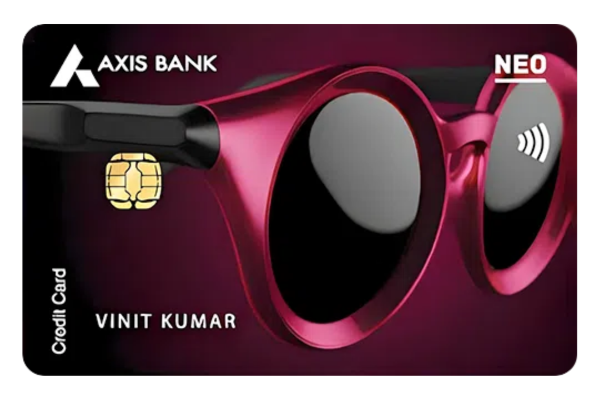
Axis Bank Neo Credit Card: Features and Benefits

Axis Bank Neo Credit Card

What is the Axis Bank Neo Credit Card?

The Axis Bank Neo Credit Card is a digital-first credit card from Axis Bank.

It is designed to be convenient for online shopping and everyday purchases.

The card focuses on value, rewards, and easy-to-use features through a mobile-friendly experience.

Key features at a glance

Digital-first approach: The card is designed for online and mobile use.

Welcome offers: New customers may receive offers like bonus points or discounts on first use

Rewards on purchases: You earn rewards or cashback on eligible transactions.

Easy payments: You can pay your bill online through the app or website.

Credit limit: You are given a credit limit based on your income and credit history.

Cost transparency: Clear fees and interest rates are disclosed at the time of approval.

Rewards and benefits

Earn points on purchases: You collect reward points for every eligible spend.

Accelerated rewards on select categories: Some categories may offer higher point earnings (for example, online shopping, dining, or groceries). The exact categories can vary by promotion.-

Redeem options: Points can be redeemed for statement credits, merchandise, or partner offers, depending on Axis Bank’s program.

No annual fee for some versions: There may be variants of the Neo card with or without an annual fee; check your specific plan.Types of Credit Card

Transferability of rewards: Points earned on Axis Bank Neo may be usable within Axis Bank’s rewards ecosystem or partnered programs, as defined in the terms.

Rewards limits and caps

There may be a cap on the number of reward points you can earn per billing cycle or per year.

Some high-reward categories might be limited by promotional offers or program rules.

Always check the current terms for caps, expiration, and redemption rules.

How to redeem rewards

Point-based redemptions: You redeem earned points for merchandise, vouchers, or statement credits.

Partner programs: Some rewards may be usable with Axis Bank partners, such as shopping portals or travel partners.Best Cash Back Credit Card in India 2025

Gift cards and discounts: Rewards can sometimes be exchanged for gift cards or exclusive discounts.

Fees you should understand before using

Annual fee (if applicable): Some Neo variants may waive the first year or charge annually.

Interest on outstanding balance: If you don’t pay in full, interest accrues.

Late payment fee: There is a charge if you miss a payment due date.

Cash withdrawal fee: Cash advances often carry higher fees and interest.

Foreign currency markup: Using the card abroad may include a currency conversion fee.

Important tips for first-time users

Read the terms and conditions carefully to know the exact rewards rates and redemption rules.

Keep your PIN and card information secure; do not share sensitive details.

Use the app to monitor your spending and keep within a budget.

Pay the full balance when possible to avoid interest charges.

Check for promotional offers and limited-time rewards events.

Common questions people ask

Does the Axis Bank Neo Card have an annual fee?

It depends on the specific variant you choose. Some versions may have no annual fee; others may have a nominal annual charge. Confirm with Axis Bank during application.

What rewards do I earn?

Rewards are earned on eligible purchases. The exact rate and categories can vary by promotion and your card variant.

Can I use this card internationally?

Yes, but check for foreign transaction fees and currency conversion charges.

How do I redeem rewards?

Use the Axis Bank app or website to redeem points for eligible items, statements credits, or partner offers, as defined in the rewards terms

Is there a digital wallet option?

Many cards from Axis Bank support digital wallet integration for easier online payments.

How to apply and get approved

You can apply online through Axis Bank’s website or app.

The bank reviews your credit history, income, and other basic details.

Approval times are usually fast, especially for digital-first products.

If approved, the card is often linked to a virtual card number for online use quickly.

Fees you should understand before using

Annual fee (if applicable): Some Neo variants may waive the first year or charge annually.

Interest on outstanding balance: If you don’t pay in full, interest accrues.

Late payment fee: There is a charge if you miss a payment due date.

Cash withdrawal fee: Cash advances often carry higher fees and interest.

Foreign currency markup: Using the card abroad may include a currency conversion fee.