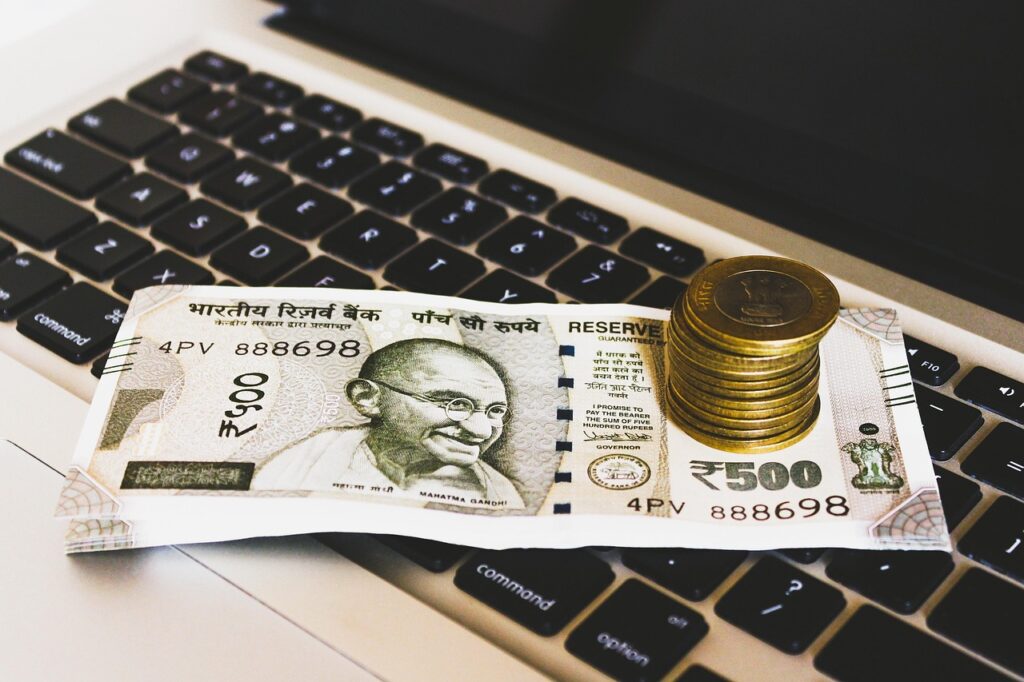

What is Mutual Fund

What is Mutual Fund

A mutual fund is an investment vehicle that pools money from multiple investors to buy a diversified portfolio of assets like stocks, ,bonds or money market instruments. Instead of picking individual stocks yourself, you buy units or shares of the mutual fund, and a professional fund manager makes the investment decisions for you.

How Mutual Funds Work

💼 Professional Management : Fund managers research, select, and monitor investments based on the fund’s goals—like growth, income, or capital preservation.

📊 Diversification : Your money is spread across many assets, reducing risk compared to investing in a single stock.

🕒 Daily Pricing: Mutual funds are priced once a day after market close, based on their Net Asset Value (NAV).-

💸 Returns: You earn money through:

Capital gains (when fund assets increase in value) – Dividends or interest from holdings Selling your fund units at a higher NAV

🧩 Types of Mutual Funds

Type What It Invests In risk Level equity Funds Stocks, High Debt Funds bonds & fixed-income Low to Medium Hybrid Funds Mix of stocks & bonds Medium ELSS Funds Tax-saving equity funds High (with tax benefits)

🚀 Why People Invest in Mutual Funds – Easy entry—start with as little as ₹500- No need to track markets daily- Ideal for long-term wealth creation- Tax benefits with certain funds (like ELSS) If you’re curious about how to choose the right fund or want help setting up your first investment, I can walk you through it step by step.

Amazon Pay ICICI Bank Credit Card

Amazon Pay ICICI Bank Credit Card

Amazon Pay ICICI Bank Credit Card designed to inform and engage readers who are considering this popular co-branded card:

🛍️ Amazon Pay ICICI Bank Credit Card: Smart Shopping Meets Seamless Rewards

In the age of digital payments and cashback culture, the Amazon Pay ICICI Bank Credit Card stands out as a powerful tool for savvy shoppers. Whether you’re a frequent Amazon user or just looking for a no-frills, high-reward credit card, this offering blends convenience, value, and simplicity.

💳 What Is the Amazon Pay ICICI Bank Credit Card?

This is a co-branded credit card issued by ICICI Bank in partnership with Amazon Pay and Visa. It’s designed to reward users for everyday purchases especially on Amazon and integrates seamlessly with the Amazon Pay ecosystem.

🎁 Key Benefits at a Glance Spending Category Cashback Rate

Amazon.in (Prime Members)5% unlimited cashbackAmazon.in (Non-Prime Members)3% unlimited Cashback Amazon Pay Partner Merchants 2% unlimited Cashback all Other Transactions 1% unlimited cashback Fuel Surcharge Waiver 1% across all fuel outlets in India No Joining Fee & No Annual Fee ,Lifetime free card with no hidden charges, Cashback as Amazon Pay Balance, Automatically credited to your Amazon account No Expiry on Rewards

Use your cashback anytime on over 10 crore products, No-Cost EMI, Available on eligible Amazon purchases.

🔄 What’s New: Changes Effective October 11, 2025 ICICI Bank has announced some updates to the card’s terms

Forex Mark-up Reduced Now just 1.99% for international transactions

Exclusions for Cashback: No cashback on transactions involving: Gold coins, EMI, rent, tax payments, education (on Amazon) – EMI, rent, fuel, tax, education, utilities, and international spends (outside Amazon)These changes aim to streamline reward categories and reduce misuse, while still offering strong value for regular Amazon shoppers.

🛒 Why It’s a Game-Changer

Perfect for Amazon Loyalists: If you shop frequently on Amazon, especially as a Prime member, this card delivers unmatched cashback.

Effortless Rewards – No need to track points or redeem manually, your cashback is credited monthly as Amazon Pay balance.

Wide Acceptance – Use it anywhere Visa is accepted, and still earn 1% cashback on general spends.

🧠 The Amazon Pay ICICI Bank Credit Card is more than just a shopping tool , it’s a lifestyle enabler. With zero fees, generous cashback, and seamless integration into the Amazon ecosystem, it’s ideal for digital-first consumers who want value without complexity.Whether you’re buying groceries, booking flights, or binge-shopping during a sale, this card ensures your money works harder for you.

RBI’s New Cheque Clearing Rules – Same Day Settlement

RBI's New Cheque Clearing Rules - Same Day Settlement

RBI’s New Cheque Clearing Rules – Same Day Settlement

🏦 RBI’s New Cheque Clearing Rules:

A Leap Toward Same-Day Settlements In a bold move to modernize India’s banking infrastructure, the Reserve Bank of India (RBI) has announced a game-changing overhaul to the cheque clearing process. Starting October 4, 2025, cheques deposited during business hours will be cleared and credited on the same day, drastically reducing the wait time that has long frustrated individuals and businesses alike.

🚀 RBI’s New Cheque Clearing Rules – Same Day SettlementBanking knowledge

Until now, cheque clearance followed a T+1 settlement cycle, meaning funds were typically credited the next working day. The new system introduces Continuous Clearing and Settlement on Realisation, which will be implemented in two phases – Phase 1 (Oct 4, 2025 – Jan 2, 2026) – Cheques will be scanned and sent to the clearing house continuously between 10 AM and 4 PM. – Banks must confirm cheques by 7 PM the same day. If no response is received, the cheque is deemed approved.

Phase 2 (Starting Jan 3, 2026) – Drawee banks must confirm cheques within 3 hours of presentation. For example, a cheque deposited at 11 AM must be confirmed by 2 PM. – Funds must be credited to the customer’s account within one hour of settlement.

📸 How It Works

The system relies on real-time image transfers of cheques, eliminating the need for physical movement. This builds on the existing Cheque Truncation System (CTS) but replaces batch processing with continuous flow, making the entire operation faster and more efficient.

💡 Why This Matters –

Speed: No more waiting 1–2 days for funds to reflect.Convenience Businesses can manage cash flow more effectively.

Trust: Cheques become more reliable for time-sensitive transactions.

Modernization: Aligns cheque processing with the pace of digital payments.

🔍 What You Should Know- Cheques must be deposited within business hours to qualify for same-day clearance. Banks will need to upgrade internal systems to meet the new timelines.Customers should expect faster notifications and quicker access to funds.

🧠 Finally This reform is one of the most significant upgrades to India’s banking system in recent years. By slashing cheque clearance times from days to hours, the RBI is not just improving efficiency ,it’s restoring confidence in a payment method that many had begun to view as outdated.

Whether you’re a business owner juggling payments or an individual waiting on a refund, this new rule means your money moves faster and that’s a win for everyone.

These 20 Sentence will help You in Your Growth

These 20 Sentence will help You in Your Growth

These 20 Sentence will help You in Your Growth

Absolutely here’s a collection of 20 life lessons, each crafted as a single sentence to spark growth, reflection, and forward momentum:l.

1. Growth begins when you stop fearing discomfort and start embracing change.Finance growth

2. Your mindset shapes your reality more than your circumstances ever will.

3. Failure isn’t the opposite of success, it’s the foundation of it.

4. The people you surround yourself with will either elevate or drain you ,choose wisely.Groth mindset

5. Discipline outlasts motivation every single time.

6. You don’t need permission to reinvent yourself.

7. Learn to listen more than you speak; wisdom often hides in silence.

8. Comparison kills joy ,run your own race.

9. Boundaries are not walls; they’re bridges to healthier relationships.

10. Time is your most valuable currency spend it with intention.

11. Confidence is built through action, not affirmation.

12. Let go of what no longer serves you, even if it once felt essential.

13. Your story matters own it, scars and all.

14. Curiosity keeps your mind young and your spirit alive.

15. Forgiveness frees you more than the person you forgive.

16. Progress is messy—don’t confuse chaos with failure.

17. Gratitude turns what you have into enough.

18. You grow when you challenge your own beliefs.

19. Rest is productive ,burnout helps no one.

20. The most powerful thing you can be is authentically yourself.

The Ultimate Guide to Investing & Building Wealth

The Ultimate Guide to Investing & Building Wealth

The Ultimate Guide to Investing & Building Wealth

Investing & Wealth Building

“The Ultimate Guide to Investing & Building Wealth in 2025” ( Pradeep Kumar Das )

💡 Section 1: Why Investing Is Essential for Wealth Building 🏫 AI and cybersecurity

Beat Inflation – Savings lose value over time; investing helps preserve and grow wealth.

Compound Growth- Reinvested earnings create exponential returns.AI career impact

Financial Independence – Investing is the path to retiring early or living life on your terms.Include a simple chart or example:> “If you invest $10,000 at 8% annual return, it grows to over $100,000 in 30 years.

🎯 Section 2: Building a Diversified Portfolio

Asset Allocation: Mix of stocks, bonds, and alternatives based on age and risk tolerance.

Rebalancing : Adjust your portfolio annually to maintain your target allocation.

Dollar-Cost Averaging:

Invest fixed amounts regularly to reduce timing risk.

📈 Section 3: Wealth Building Strategies

Start Early -Time in the market beats timing the market.

Automate Investments- Use robo-advisors or auto-deposits.

Increase Income Streams- Invest in side hustles, rental properties, or dividend stocks.- Tax Efficiency: Use retirement accounts (e.g., IRAs, 401(k)s) and tax-loss harvesting.

🧭 Section 4: Common Mistakes to Avoid

Chasing trends (e.g., meme stocks or crypto hype)- Ignoring fees (expense ratios, trading costs)- Emotional investing (panic selling or FOMO buying)- Lack of research or due diligence.

🔮 Section 5: Future Trends in Investing

AI-Powered Investment Tools: Platforms like Toggle AI are transforming decision-making⁽¹⁾- Sustainable Investing- ESG funds are gaining popularity- Fractional Investing- Makes high-value assets accessible to small investors.

📝 Conclusion 💵

Wealth isn’t built overnight but with consistent investing, smart choices, and a long-term mindset, financial freedom is within reach.

Credit Card – A Useful Tool or A Financial Trap

Credit Card – A Useful Tool or A Financial Trap

Credit cards have become an essential part of modern financial life. They offer convenience, reward points, discounts, and emergency access to funds. However, if not used wisely, a credit card can quickly turn into a debt trap , leading to financial stress and poor credit health.Let’s understand why credit cards require responsible usage and how mismanagement can backfire.

Credit Cards are Not Free Money 💰

Many people make the mistake of thinking a credit card is a way to spend freely. But remember every rupee spent on your card must be repaid. When you swipe your card, you’re borrowing money from the bank. And like every loan, it comes with a due date, interest, and penalties if you fail to pay on time.This is where most people fall into trouble. They spend more than needed, forget the due date, and then face late payment charges, high interest (up to 36% per year), and a falling credit score.

Know How to Use It or It Will Use You

A credit card is not for everyone. It’s a tool for people who are – Financially disciplined, Aware of their monthly expenses, Able to repay the full amount before the due date.

If you don’t track your spending or rely on your credit card for non-essential shopping, you may find yourself crossing your budget without realizing it.

It’s important to learn – How credit card billing cycles work , What is the minimum amount due (and why you should avoid paying just that) – How interest-free periods can help you plan better.

Don’t Swipe Without a Reason

Before using your credit card, ask yourself:

Do I really need this item? Can I afford to buy this in cash? , Is this an emergency or just impulse buying?

Many users swipe their cards for unnecessary shopping, food deliveries, or gadgets they don’t really need. Later, when the bill arrives, they struggle to pay, leading to EMI conversions, interest payments, and sometimes default.

It’s always smarter to pay in cash or debit card if possible — because you feel the money leaving your hand, which makes you more conscious about your spending. With credit cards, you may overspend without feeling the pinch — until the bill arrives.

Use Smartly, Not Emotionally

If used smartly, credit cards can help you:- Build a strong credit history – Earn cashback or reward points – Get access to emergency funds But all this comes *only if you pay on time and in full.

Conclusion

A credit card is like a sharp knife, it’s useful, but dangerous if mishandled. So, don’t fall into the trap of overspending. Use your credit card with a plan, not emotions. Stick to essentials, avoid impulse buys, and treat your card like a debit card — spend only what you can afford to pay back.Stay aware. Stay disciplined. And make your credit card work for you not against you.

How to Start Your Finance Planing Journey?

How to Start Your Finance Planing Journey?

How to Start Your Financial Planning Journey – Step by Step Guide By [Pradeep Kumar Das]

For Beginners in India , Starting your financial planning journey can feel overwhelming but don’t worry. You don’t need to be a finance expert or earn lakhs per month. All you need is a clear mindset and consistency.Here’s a simple step-by-step guide to help you get started.

✅ Step 1. Set Clear Financial Goals Ask yourself, What do I want to achieve? AI career impact

How to Start Your Financial Planning Journey

Save for emergency? – Buy a house? -Child’s education? – Retirement?

Write down your short-term (1–3 years), medium-term (3–5 years) and long-term (10+ years) goals.

✅ Step 2. Track Your Income & Expenses- Know exactly how much you earn and where your money goes- Use apps like Walnut, Money view, or simply Excel- Aim to save at least 20–30% of your income.Ai kya hai

✅ Step 3. Build an Emergency Fund- Save at least 3–6 months of expenses – Keep it in a separate savings account or liquid mutual fund – Use it only for real emergencies.

✅ Step 4: Get Proper Insurance- Term Insurance – to protect your family – Health Insurance – to avoid medical burden – Avoid mixing insurance + investment.

✅ Step 5. Start Investing Early Even small SIPs of ₹500/month can grow big over time.- For short-term goals: Recurring Deposits, Liquid Funds – For long-term: Equity Mutual Funds, PPF, NPS, Gold – Avoid investing randomly — match with your goals.

✅ Step 6. Plan Your Taxes- Know your eligible deductions under *80C, 80D, etc. – Invest in tax-saving instruments early in the financial year.

✅ Step 7. Avoid Unnecessary Debt- Use credit cards wisely — pay full dues on time – Avoid personal loans for shopping or travel – Focus on building a good CIBIL score.

✅ Step 8. Review Your Plan Annually- Review your goals, investments, and expenses at least once a year – Adjust your SIPs, insurance, and budget as life changes.

💡 Final Tip 🎯

Start simple. Stay consistent. Think long term. Financial planning is not about perfection ,it’s about progress.

What is Financial Planning?

What is Financial Planning?

What is Financial Planning?

A Complete Guide to Securing Your Future By [Pradeep Kumar Das] | Updated: September 2025

Failing to plan is planning to fail 😔

This quote fits perfectly when it comes to money and life goals.Financial planning isn’t just for millionaires or business owners, it’s for anyone who earns, spends, and dreams. Whether you’re saving for a house, child’s education, or just want to retire stress-free, financial planning is the *roadmap to your dreams.

💡 What is Financial Planning?

Financial Planning is the process of Setting financial goals – Evaluating your current financial position – Creating a strategy to achieve your short-term and long-term goals – Reviewing and adjusting your plan Regularly it helps you take control of your money and avoid financial stress.

🧱 Key Elements of Financial Planning

1.Income & Expense Tracking – Understand where your money comes from and where it goes.

2. Budgeting – Create a monthly budget to control spending and boost savings

3. Emergency Fund – Keep at least 3–6 months of expenses aside for emergencies

4. Insurance Planning – Buy term insurance and health insurance to protect your family

5. Tax Planning – Use Section 80C, 80D, and other deductions to save tax legally

6. Investment Planning – Choose the right instruments (FD, mutual funds, PPF, SIPs, gold, real estate) based on your goals

7. Retirement Planning – Start early to build a solid retirement corpus through EPF, NPS, or retirement mutual funds

8. Debt Management – Clear high-interest loans first, avoid unnecessary EMIs, and maintain a good credit score

9. Goal-Based Planning – Plan for specific goals like a car, home, education, wedding, or world tour

10. Estate Planning – Make a will, assign nominees, and manage inheritance in advance

🎯 Why Financial Planning is Important- Reduces money stress – Helps you make smarter decisions – Ensures a better future for your family – Builds financial discipline – Helps face emergencies without panic – Protects you from debt traps

👨‍👩‍👧‍👦 Who Should Do Financial Planning?Everyone! From a student or salaried employee to a business owner or retiree.

financial planning is for all income groups.

SIP Kya hai ? Small investment, Big Dream.A Smart Way to Invest in Mutual Fund

SIP Kya hai ? Small investment, Big Dream.A Smart Way to Invest in Mutual Fund

SIP (Systematic Investment Plan)

SIP Kya Hai? Small Investment, Big Dreams – A Smart Way to Invest in Mutual Funds By [Pradeep Kumar Das] Updated: September 2025

Paise bachao” is advice we all hear. But “paise badao” is what truly builds wealth. If you’re someone who finds investing complicated or risky, let me introduce you to your best friend in finance 💵

the Systematic Investment Plan (SIP). It’s not a shortcut to riches, but a smart and disciplined path to financial freedom.Let’s break it down in simple terms.

🌱 What is SIP?

SIP (Systematic Investment Plan) is a way to invest a fixed amount regularly (monthly/weekly) in mutual funds.You don’t need ₹1 lakh. You can start with just ₹500/month.

Think of it like:> “Netflix subscription, but for your future!”You pay a small amount every month → it gets invested in a mutual fund → your money grows over time → thanks to compounding.

💡 How Does SIP Work?

1. Choose a mutual fund (equity, debt, hybrid, etc.)

2. Set a fixed amount (e.g., ₹1000 per month)

3. The amount gets auto-debited from your bank

4. You get units of the mutual fund based on that day’s NAV

5. Over time, the value of your units *grows with the market

🔍 Benefits of SIP

1. Start Small, Dream Big Even ₹500/month can grow into lakhs in 10–15 years.

2. Rupee Cost Averaging Markets up or down? Doesn’t matter. SIP averages out your buying cost over time.

3. Compounding Magic

Your money earns returns → those returns earn more returns → it snowballs!

4. Disciplined Saving Habit Money auto-debited means no temptation to skip.

5. No Need to Time the Market Perfect for beginners. You don’t have to be a market expert.

📈 How Much Can You Earn?

Let’s say you invest ₹2000/month for 10 years in an equity mutual fund.- Approx return @ 12% CAGR – You invest ₹2.4 lakh – Final value = ₹4.65+ lakh (est.)

(Returns not guaranteed. Based on historical performance.)

⚠️ Things to Keep in Mind-

Long-term mindset = better results – Choose funds with good track record – SIP is not risk-free, but risk is lower over time – Don’t panic during market dips – Review your SIPs annually.

🧠 Who Should Start SIP?

Students – start early with small amount – Salaried people – build wealth for future – Freelancers – create a safety net – Anyone with a goal – education, house, retirement

📌 Final Words

SIP is like a financial gym — you won’t see six-pack abs in 1 month, but with consistency, you’ll transform your future.Start small, stay consistent, and let your money work harder than you do.